
smartbuildingmag.com
04
'26
Written on Modified on
High-Capacity Plug-In Residential Solar Battery
Anker SOLIX introduces a 7 kWh home energy storage system designed to replace conventional string inverters and optimize self-generated power consumption.
www.ankersolix.com
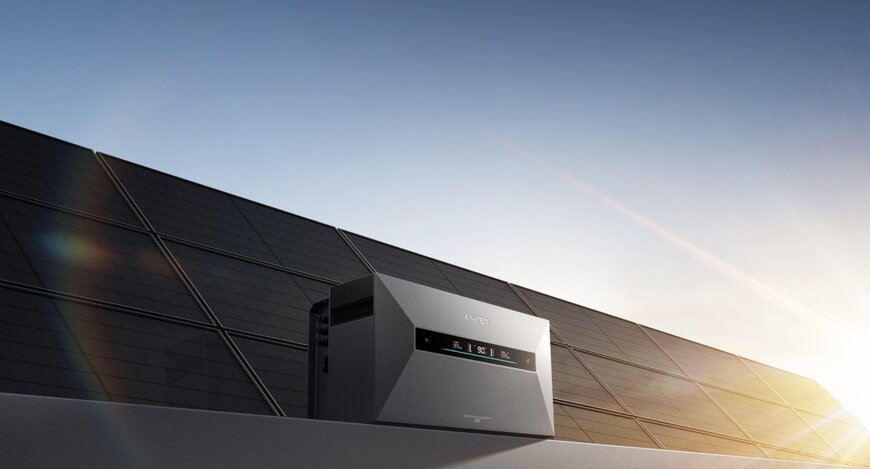
Anker SOLIX introduced the Solarbank Max home energy storage system at the IFA 2026 trade show in Berlin, Germany (4-8 September). The hardware is engineered for the residential renewable energy sector, specifically addressing the technical requirements of households upgrading existing photovoltaic arrays or deploying new solar-integrated battery infrastructure.
Hardware Architecture and Solar Input Capacity
The system provides a base storage capacity of 7 kWh, which can be expanded to a maximum of 42 kWh by connecting up to five expansion modules. The internal architecture integrates three Maximum Power Point Trackers (MPPTs) to support a direct solar input of up to 10 kWp, accommodating arrays of up to 18 photovoltaic panels. For specific regional markets characterized by established solar adoption, such as the Netherlands, the unit is engineered to function as a direct replacement for traditional string inverters. By routing direct current from the panels into the battery management system, the hardware limits conversion losses and centralizes energy processing within a single enclosure.
Power Output and Grid Integration Methods
The default discharge configuration operates at 800 W when connected via a standard Schuko socket, aligning with basic plug-in deployment constraints. When integrated into a dedicated household circuit, the output threshold increases to 3,500 W, while a hardwired installation by a certified electrician enables a maximum continuous alternating current output of 5,000 W. This scaling allows the system to support high-load appliances, including heat pumps and electric vehicle charging infrastructure. For localized grid independence, the hardware features a 3,680 W off-grid output with a 0-millisecond switchover time, functioning as an uninterruptible power supply. For whole-home integration, the system pairs with a 63 A to 100 A backup auto switch that connects directly to the main distribution board, ensuring continuous power to all structural circuits during utility grid failures.
Software Management and Smart Grid Integration
Operational logic is governed by an automated energy management system that executes charge and discharge cycles based on real-time environmental and economic variables. The software processes localized weather data, historical consumption patterns, and dynamic tariff rates from over 870 electricity suppliers. This smart grid integration allows the system to store energy during periods of low utility costs and discharge during peak pricing intervals. The control architecture processes all telemetry data locally, maintaining CSA-STAR Gold certification for data security, and supports direct integration with open-source smart home platforms such as Home Assistant for cloud-independent automation.
Cell Chemistry and Environmental Tolerances
The physical energy storage utilizes 314-ampere-hour Lithium Iron Phosphate (LFP) battery cells engineered for high-frequency cycling. The cell chemistry supports a rated lifespan of 10,000 charge cycles and a 100 percent depth of discharge capability. The external housing features an IP66 rating for dust and water ingress protection, while the internal thermal management system maintains reliable operation across a temperature range of -20°C to +55°C.
Additional Context
This section details technical specifications and competitive benchmarking not included in the original news release.
The 10 kWp solar input capacity of this plug-in system represents a significant deviation from standard consumer solar batteries. Comparable modular plug-in solutions, such as the Zendure SolarFlow or EcoFlow PowerStream, typically restrict solar input to between 800 W and 1,500 W to align with basic micro-inverter regulatory limits. By integrating three high-capacity MPPTs, the Solarbank Max competes directly with hardwired fixed hybrid inverters, such as the Huawei SUN2000 series or the Fronius Symo GEN24 Plus, while retaining lower-tier plug-and-play output configurations. Furthermore, the utilization of 314Ah LFP cell architecture aligns with the technical benchmarks set by Tier 1 stationary storage manufacturers, matching the 10,000-cycle degradation limits observed in industry-standard hardware like the BYD Battery-Box Premium line.
Edited by Aishwarya Mambet, Induportals Editor, with AI assistance.
www.ankersolix.com
