
smartbuildingmag.com
01
'26
Written on Modified on
Continuous energy generation beyond solar dependency
Neutrino Energy Group introduces neutrinovoltaic technology as a complementary solution for uninterrupted, weather-independent power generation.
neutrino-energy.com
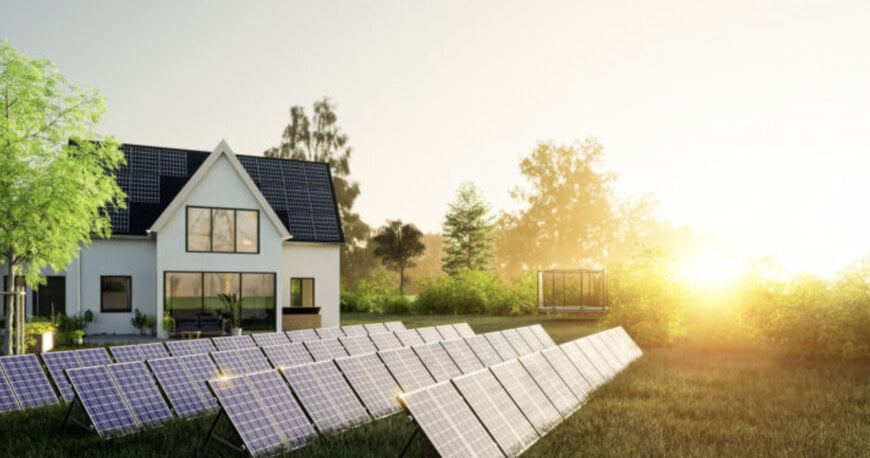
On a clear day in southern Spain or the Arizona desert, photovoltaic systems demonstrate the efficiency of modern solar technology. However, their performance remains inherently dependent on sunlight availability. Reduced irradiance due to cloud cover, seasonal variation or nighttime conditions directly impacts output, highlighting a fundamental limitation of photovoltaic generation in delivering continuous power.
Structural limitations of solar energy
Solar energy has achieved remarkable growth, with global capacity exceeding one terawatt and costs significantly reduced. Yet, its variability introduces operational challenges. Fluctuations between peak generation and actual demand—commonly described as the “duck curve”—require balancing mechanisms such as energy storage.
While batteries mitigate some variability, they introduce additional costs, material dependencies and lifecycle constraints. In regions with limited grid infrastructure, seasonal weather patterns or low solar exposure, reliance on photovoltaic systems alone remains insufficient for stable energy supply.
Neutrinovoltaic technology: a different energy approach
The Neutrino® Energy Group proposes an alternative concept with its neutrinovoltaic technology. Instead of relying on sunlight, the system converts ambient kinetic energy from subatomic particles and background fields into electricity.
This includes neutrinos, cosmic particles, electromagnetic radiation and thermal fluctuations—energy sources that are continuously present regardless of weather, time of day or geographic location. Unlike solar panels, which depend on surface exposure to light, neutrinovoltaic systems operate independently of environmental visibility conditions.
Energy conversion at the material level
The technology is based on multilayer nanostructures composed of graphene and doped silicon. Interactions with ambient particles generate microscopic vibrations within the material, which are converted into electrical energy through combined physical effects such as piezoelectric, flexoelectric and triboelectric mechanisms.
This volumetric conversion approach allows energy generation to scale with material structure rather than surface area, enabling continuous output without reliance on external light sources.
Neutrino Power Cube: compact continuous generation
The practical implementation of this technology is represented by the Neutrino Power Cube, a compact, solid-state generator designed to operate without fuel, sunlight or grid dependency. With no moving parts, it is engineered for continuous operation across diverse environmental conditions.
This enables new application scenarios where traditional energy systems face limitations, including remote locations, off-grid environments and regions with unstable infrastructure.
Implications for global energy systems
Neutrinovoltaic technology is not positioned as a replacement for solar energy, but as a complementary solution addressing its inherent intermittency. By providing a continuous baseline energy source, it can support critical infrastructure such as healthcare facilities, emergency systems and decentralized energy networks.
The technology reflects a broader shift toward diversified energy systems, combining multiple generation methods to ensure reliability, efficiency and resilience.
From scientific foundation to industrial scaling
The underlying scientific principles—such as neutrino mass and particle interaction—have been experimentally validated. The current focus lies on engineering scalability and industrial deployment.
With a defined theoretical framework and ongoing development, neutrinovoltaic technology represents an emerging approach in the evolution of energy systems, aiming to complement renewable sources with continuous, ambient energy conversion.
As global energy demand grows and system resilience becomes increasingly critical, technologies capable of delivering stable, uninterrupted power will play a key role in shaping the next phase of the energy transition.
Edited by Maria Brueva, Induportals editor – adapted by AI.
www.neutrino-energy.com
