
smartbuildingmag.com
11
'26
Written on Modified on
Building Automation Data Integration with Enterprise IoT
ABB and Samsung are linking industrial building control infrastructure with enterprise IoT platforms to enable centralized facility management and automated energy monitoring.
global.abb
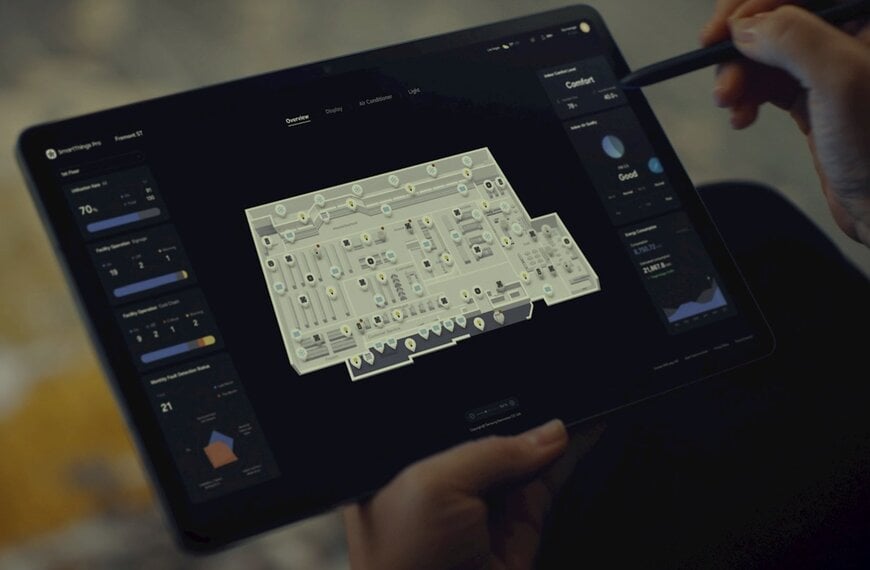
Samsung SmartThings Pro
ABB and Samsung Electronics are partnering to integrate the ABB Ability BuildingPro platform with the Samsung SmartThings Pro enterprise IoT ecosystem. This technical integration links field-level building automation systems with cloud-based management architectures for deployment in commercial real estate and hospitality environments.
Addressing Facility Management Complexity
Facility operators managing large real estate portfolios face data fragmentation when aggregating operational metrics across disparate control systems. To resolve this integration challenge, ABB and Samsung Electronics established a cooperative framework that connects building intelligence hardware with enterprise-level dashboards. This collaboration consolidates complex field-level device data into a single cloud environment, bypassing the need for disconnected, proprietary monitoring software.
Technical Solution and Responsibilities
The integration architecture relies on the ABB edge computing layer to process industrial automation protocols such as BACnet, KNX, and ModBus, alongside localized energy metering data. ABB handles this hardware abstraction and provides a secure uplink to the cloud via its native software suites. Conversely, Samsung manages the enterprise visualization and control interface, pulling the aggregated data into its ecosystem through secure cloud-to-cloud Application Programming Interfaces. This division of responsibility allows for bidirectional data sharing, giving operators a unified view of heating, ventilation, air conditioning, lighting, and access control systems.
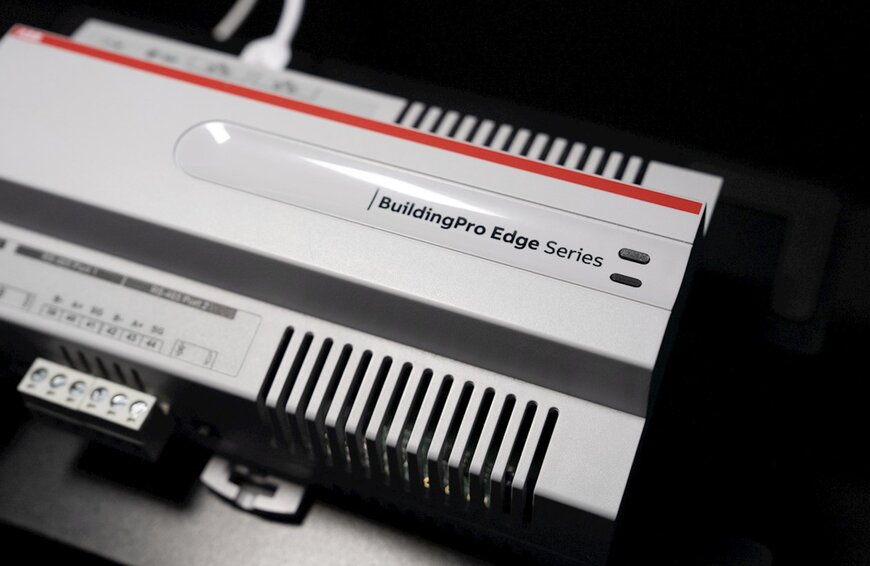
ABB Ability™ BuildingPro Edge
Applications and Use Cases
The integrated architecture targets smart building systems within commercial offices, retail spaces, and hotels. In the hospitality sector, the deployment utilizes a specific configuration of ABB i-bus KNX hardware and NETxAutomation software. This setup links room occupancy sensors directly with climate and lighting controls to automate energy conservation based on physical presence. Furthermore, the architecture permits phased implementations, allowing facility engineers to validate system stability in isolated zones before scaling the integration across an entire property.
Deployment and Expected Impact
To validate interoperability and benchmark energy efficiency mechanisms, the integrated system was deployed at three pilot facilities during 2026: the Samsung Enterprise Experience Center in Eschborn, Germany, the Samsung Training Center in Amsterdam, the Netherlands, and the ABB headquarters in Middelfart, Denmark. These real-world testing environments are designed to measure baseline reductions in energy consumption driven by occupancy-based automation.
Strategic Insight
Mike Mustapha, president of the Smart Buildings Division at ABB Electrification, noted the technical rationale for the partnership by stating that building owners need a reliable database and tools that make it easier to manage increasingly complex building portfolios. The integration prioritizes accessible operational data to support centralized facility control decisions.
Edited by Aishwarya Mambet, Induportals Editor, with AI assistance.
www.abb.com
ABB and Samsung Electronics are partnering to integrate the ABB Ability BuildingPro platform with the Samsung SmartThings Pro enterprise IoT ecosystem. This technical integration links field-level building automation systems with cloud-based management architectures for deployment in commercial real estate and hospitality environments.
Addressing Facility Management Complexity
Facility operators managing large real estate portfolios face data fragmentation when aggregating operational metrics across disparate control systems. To resolve this integration challenge, ABB and Samsung Electronics established a cooperative framework that connects building intelligence hardware with enterprise-level dashboards. This collaboration consolidates complex field-level device data into a single cloud environment, bypassing the need for disconnected, proprietary monitoring software.
Technical Solution and Responsibilities
The integration architecture relies on the ABB edge computing layer to process industrial automation protocols such as BACnet, KNX, and ModBus, alongside localized energy metering data. ABB handles this hardware abstraction and provides a secure uplink to the cloud via its native software suites. Conversely, Samsung manages the enterprise visualization and control interface, pulling the aggregated data into its ecosystem through secure cloud-to-cloud Application Programming Interfaces. This division of responsibility allows for bidirectional data sharing, giving operators a unified view of heating, ventilation, air conditioning, lighting, and access control systems.
ABB Ability™ BuildingPro Edge
Applications and Use Cases
The integrated architecture targets smart building systems within commercial offices, retail spaces, and hotels. In the hospitality sector, the deployment utilizes a specific configuration of ABB i-bus KNX hardware and NETxAutomation software. This setup links room occupancy sensors directly with climate and lighting controls to automate energy conservation based on physical presence. Furthermore, the architecture permits phased implementations, allowing facility engineers to validate system stability in isolated zones before scaling the integration across an entire property.
Deployment and Expected Impact
To validate interoperability and benchmark energy efficiency mechanisms, the integrated system was deployed at three pilot facilities during 2026: the Samsung Enterprise Experience Center in Eschborn, Germany, the Samsung Training Center in Amsterdam, the Netherlands, and the ABB headquarters in Middelfart, Denmark. These real-world testing environments are designed to measure baseline reductions in energy consumption driven by occupancy-based automation.
Strategic Insight
Mike Mustapha, president of the Smart Buildings Division at ABB Electrification, noted the technical rationale for the partnership by stating that building owners need a reliable database and tools that make it easier to manage increasingly complex building portfolios. The integration prioritizes accessible operational data to support centralized facility control decisions.
Edited by Aishwarya Mambet, Induportals Editor, with AI assistance.
www.abb.com
