
smartbuildingmag.com
06
'26
Written on Modified on
Distributed Energy Generation Through Structured Materials
Neutrino Energy Group introduces the Schubart Master Equation as a theoretical framework for distributed microgeneration embedded in materials and infrastructure surfaces.
neutrino-energy.com
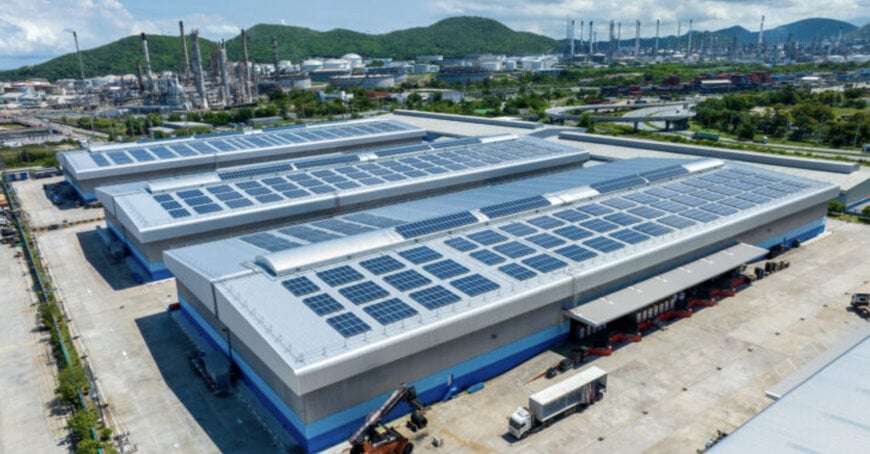
For much of the past century, electricity systems have followed a centralized architecture: large power plants generate energy that is transmitted through grid networks and delivered to buildings designed primarily as consumers. Industrial facilities, urban structures, and transport infrastructure have traditionally functioned as energy loads rather than energy sources.
A different perspective on energy distribution emerges from the Schubart Master Equation, developed by mathematician Holger Thorsten Schubart within the Neutrino® Energy Group as a theoretical foundation for neutrinovoltaic research. Rather than proposing new physical laws, the model formalizes a conservative framework in which electrical output is limited by the sum of measurable environmental inputs coupled with material conversion efficiency. Within these constraints, the approach explores how structured materials may convert persistent environmental energy flux into small but continuous electrical output.
Theoretical framework
The Schubart Master Equation expresses electrical output as the product of device efficiency and the volumetric integration of external momentum flux interacting with a structural coupling coefficient. In practical terms, the model states that energy generation cannot exceed the environmental energy interacting with the system and the efficiency with which materials convert that energy.
The formulation intentionally incorporates a conservative inequality: output power remains bounded by total external input. The system is treated as an open, non-equilibrium interaction with environmental flux, avoiding claims of over-unity or hidden energy sources.
This framework shifts the engineering focus from maximizing peak generation capacity toward designing materials capable of harvesting weak but continuous environmental energy flows. In neutrinovoltaic research, these flows may include ambient electromagnetic fields, thermal fluctuations, and other environmental drivers that exist outside classical equilibrium conditions.
Volumetric energy conversion
Unlike conventional photovoltaic systems, which scale with illuminated surface area, the Schubart Master Equation models energy conversion as a volumetric process. Nanostructured multilayer materials developed within neutrinovoltaic concepts rely on dense networks of interfaces and asymmetric junctions where environmental interactions can occur.
In this architecture, each microscopic interaction contributes a small fraction of converted energy. When aggregated across large numbers of nanoscale units, these contributions accumulate into measurable electrical output. The scaling principle resembles statistical aggregation rather than the traditional scaling of centralized energy generation infrastructure.
This approach suggests that structural materials—including walls, façades, and infrastructure surfaces—could potentially act as distributed energy interfaces rather than passive elements within energy systems.
Distributed baseline generation
Contemporary electrical grids are optimized to manage peak demand through large centralized generation assets. However, maintaining stable operation also requires baseline generation capable of providing continuous energy supply.
According to the conceptual framework described by the Schubart equation, background-driven energy conversion operates continuously because its environmental inputs persist over time. These inputs may include ambient electromagnetic activity, secondary cosmic radiation, and thermal or mechanical fluctuations present in the environment.
While the resulting power density remains modest, continuous microgeneration distributed across infrastructure surfaces could create a supplementary baseline layer within energy systems. Rather than replacing conventional generation assets, this layer would complement them by diversifying the energy production topology.
Infrastructure integration
Urban environments contain extensive structural surfaces—buildings, transport barriers, industrial cladding, and architectural elements—that currently serve only structural purposes. In a volumetric conversion model, these surfaces could integrate nanostructured material systems designed to interact with environmental energy flux.
Potential applications include powering distributed sensors, monitoring devices, or edge computing nodes where small but persistent energy supply can reduce reliance on battery replacement or external wiring. Within hybrid microgrid systems, such distributed baseline generation may also contribute to improved operational stability.
Engineering considerations
Resonance phenomena play a supporting role within this architecture by improving the selectivity of energy coupling between environmental flux and material structures. However, resonance does not increase the total available energy. Instead, it enhances conversion efficiency by reducing dissipation and concentrating absorbed energy within usable modes.
The engineering challenge therefore lies in optimizing material structures, coupling coefficients, and rectification processes while remaining within thermodynamic limits defined by the conservative energy balance of the Schubart equation.
Implications for energy system design
If validated through continued research and experimental verification, the conceptual model suggests a gradual shift in energy system topology. Large centralized plants and renewable generation facilities would remain core components of the grid, while distributed microgeneration embedded within materials could form an additional statistical layer of energy contribution.
Such an architecture would not dramatically increase individual power densities but could redistribute energy production across the built environment. In this context, infrastructure surfaces transition from purely structural elements into potential contributors to distributed energy ecosystems.
The Schubart Master Equation therefore does not redefine physical laws; rather, it provides a mathematical framework for exploring how existing environmental energy flux may be harnessed through advanced material engineering. In energy systems increasingly focused on resilience, decentralization, and measurable efficiency, this perspective introduces a new dimension to the design of future energy infrastructure.
www.neutrino-energy.com
