
smartbuildingmag.com
27
'25
Written on Modified on
Siemens and Bavarian State Opera develop digital twin for Bavaria’s National Theater
A digital twin now simulates realistic acoustics and sound effects, enabling a mixed-reality audio-visual experience for digital event venues, enhancing planning and staging with new functions.
www.siemens.com
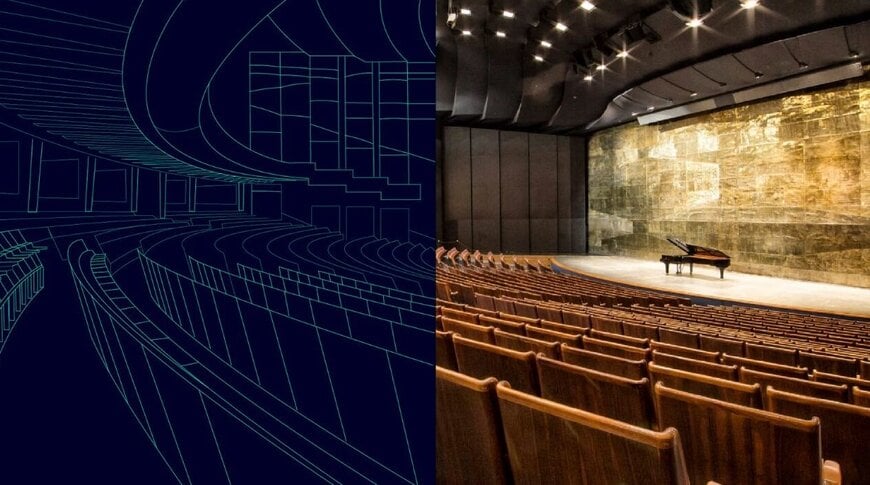
Siemens and the Bavarian State Opera are digitalizing the acoustics in Bavaria’s National Theater in Munich, Germany. The result is a digital twin that simulates sound effects, orchestral setups and venue configurations in a realistic 3D acoustic model so that musicians, the director and conductors can assess a concert hall’s acoustics even before the first rehearsal. The Sound of Science, a mixed-reality application, allows users to acoustically test various orchestral setups and audience positions in Bavaria’s National Theater with the help of virtual-reality goggles independently of the users’ physical location.
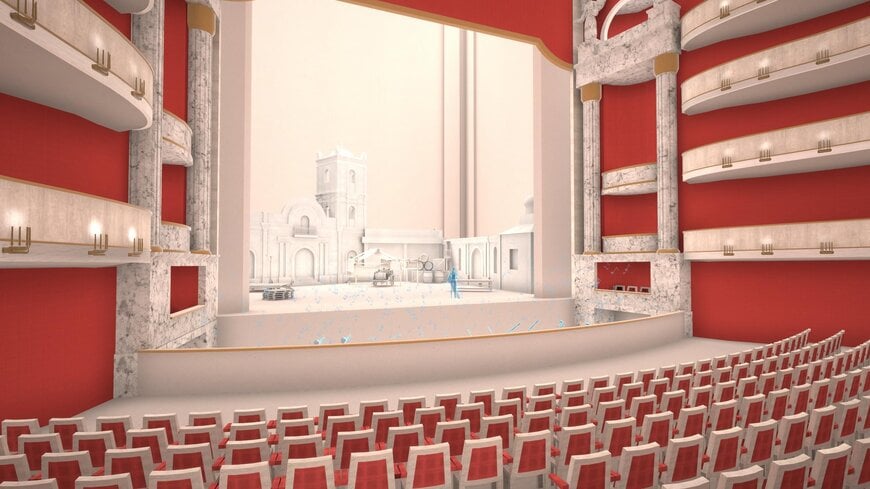
Siemens launched the Sound of Science at the Salzburg Festival in 2024. In developing the application for Bavaria’s National Theater, the company is now using it to enhance the performance of yet another internationally renowned cultural institution. Released just in time for the Munich Opera Festival, the current version includes additional concert hall configurations and new acoustic scenarios. For example, a stage set can now be incorporated and the orchestra’s position varied. To achieve a realistic sound assessment, a vocal part – sung by soprano Emilie Sierra, a member of the Bavarian State Opera, and accompanied by the Bavarian State Orchestra – has been integrated into the application for the first time.
"The idea for the Sound of Science application was spawned by the trend toward increasingly shorter rehearsal times and rising concert logistics costs. Our simulation of realistic stage productions enables theater professionals to plan much more precisely in advance, while giving audiences a preliminary impression of the acoustic conditions," said Stephan Frucht, Artistic Director of the Siemens Arts Program.
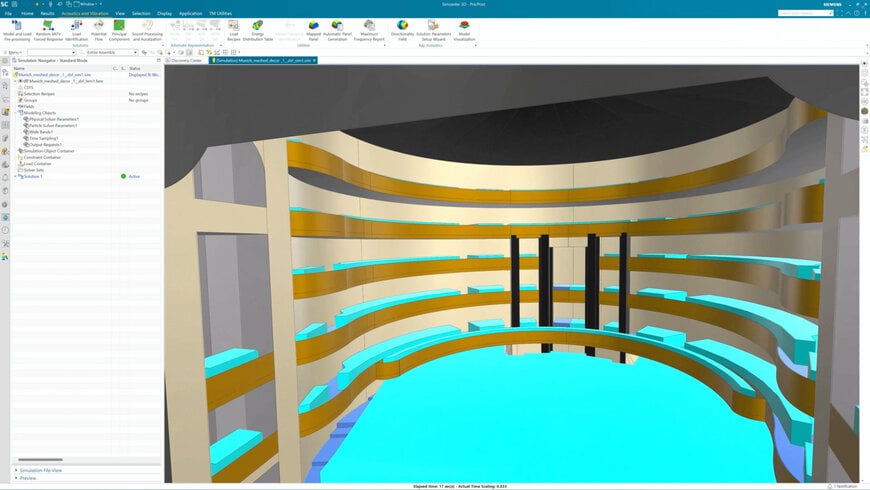
The technology underlying the Sound of Science is provided by Siemens Simcenter, a portfolio of simulation and testing solutions that has been part of the company's core business for more than 15 years. Simcenter processes impulse response measurements and uses ray tracing to calculate how sound waves propagate in space. Different materials influence reflection – thus creating a venue’s specific acoustics.
“The benefits of digital twin technology extend well beyond the concert hall, offering transformative advantages across various industry sectors,” said Jean-Claude Ercolanelli, Senior Vice President for Simulation and Test Solutions at Siemens. “The Siemens’ comprehensive Digital Twin facilitates cost reduction, resource optimization, time savings, risk mitigation, enhanced decision-making, and improved collaboration. By visualizing potential challenges in advance, our comprehensive digital twin empowers us to make more informed decisions in the physical world.”
www.siemens.com
Siemens launched the Sound of Science at the Salzburg Festival in 2024. In developing the application for Bavaria’s National Theater, the company is now using it to enhance the performance of yet another internationally renowned cultural institution. Released just in time for the Munich Opera Festival, the current version includes additional concert hall configurations and new acoustic scenarios. For example, a stage set can now be incorporated and the orchestra’s position varied. To achieve a realistic sound assessment, a vocal part – sung by soprano Emilie Sierra, a member of the Bavarian State Opera, and accompanied by the Bavarian State Orchestra – has been integrated into the application for the first time.
"The idea for the Sound of Science application was spawned by the trend toward increasingly shorter rehearsal times and rising concert logistics costs. Our simulation of realistic stage productions enables theater professionals to plan much more precisely in advance, while giving audiences a preliminary impression of the acoustic conditions," said Stephan Frucht, Artistic Director of the Siemens Arts Program.
The technology underlying the Sound of Science is provided by Siemens Simcenter, a portfolio of simulation and testing solutions that has been part of the company's core business for more than 15 years. Simcenter processes impulse response measurements and uses ray tracing to calculate how sound waves propagate in space. Different materials influence reflection – thus creating a venue’s specific acoustics.
“The benefits of digital twin technology extend well beyond the concert hall, offering transformative advantages across various industry sectors,” said Jean-Claude Ercolanelli, Senior Vice President for Simulation and Test Solutions at Siemens. “The Siemens’ comprehensive Digital Twin facilitates cost reduction, resource optimization, time savings, risk mitigation, enhanced decision-making, and improved collaboration. By visualizing potential challenges in advance, our comprehensive digital twin empowers us to make more informed decisions in the physical world.”
www.siemens.com
