
smartbuildingmag.com
23
'26
Written on Modified on
Siemens Showcases Digital Fire Safety Innovations at NFPA 2026
New detection, notification and digital tools aim to improve fire protection, compliance and infrastructure resilience.
www.siemens.com
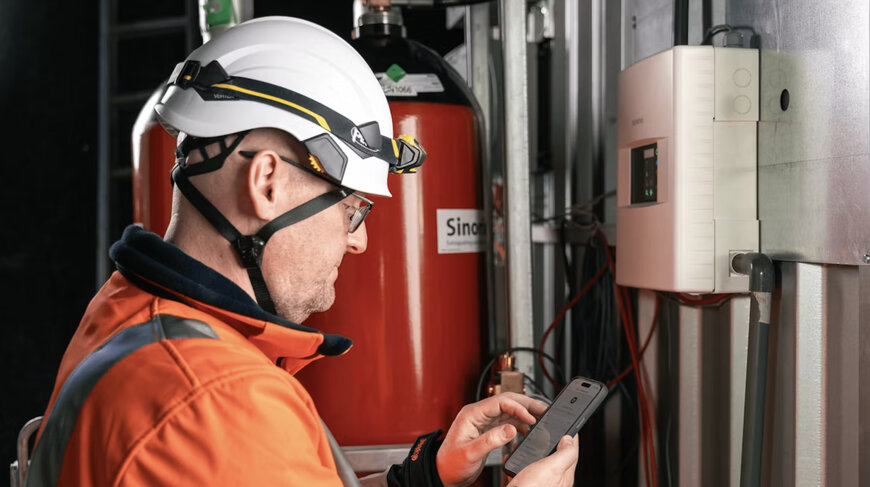
Siemens has introduced an updated portfolio of digital fire protection architectures, including addressable notification hardware and aspirating smoke detection systems. These technologies provide automated diagnostics and network connectivity to support fire safety management in data centers, energy storage facilities, and large-scale commercial buildings.
Addressable Notification Architectures and Automated Diagnostics
At the NFPA Conference and Expo 2026 in Las Vegas, Nevada, scheduled June 22 to 24, Siemens exhibited the Acend Intelligent system, an addressable notification appliance portfolio. This system incorporates automated self-test functionalities and cloud-based panel connectivity, allowing facility managers to verify operational status without triggering building-wide acoustic and visual alarms. The integration of addressable network nodes reduces testing disruptions while generating continuous operational data to support system reliability and maintenance monitoring.
Aspirating Smoke Detection for High-Density Environments
The company also presented the ASD+ aspirating smoke detection solution, which has secured Underwriters Laboratories certification for deployment within the United States. Designed for high-risk and complex environments such as data centers, lithium-ion battery energy storage facilities, and industrial warehouses, the hardware actively draws ambient air samples to detect combustion particles before visible smoke forms. Commissioning and maintenance processes are managed through the ASD Connect application, allowing technicians to adjust system flexibility and sensitivity parameters based on specific airflow and spatial requirements.
Digitalization of Detector Loop Programming
To optimize the deployment of fire safety networks, Siemens introduced the Fire Install Suite, a digital toolset designed to automate the programming of detector and notification loops. Utilizing a compact programming module alongside the Building X Fire Install application, the system transitions commissioning workflows from physical documentation to a real-time digital synchronization process. This suite functions in tandem with the Fire Digital Twin platform, which provides a virtual representation of the physical fire safety infrastructure to support system planning, real-time visibility, and future hardware configurations.
Direct Current Arc Flash Modeling and Electrical Standardization
Siemens and industry peers sponsored the NFPA Research Foundation to develop a predictive model for direct current arc flash phenomena. Current safety guidance under IEEE 1584, which is referenced in NFPA 70E, applies primarily to alternating current systems. As direct current applications expand in renewable energy and battery storage sectors, existing methodologies may overestimate or miscalculate hazard levels. This research initiative seeks to establish empirical calculation methods to inform the safe design of future direct current electrical components. The company also addressed compliance with NFPA 70B standards through educational sessions covering electrical reliability and risk management in facility infrastructure.
Additional Context:
This section details technical specifications and competitive benchmarking not included in the original product announcement
The commercial fire safety sector includes multiple manufacturers offering addressable notification and aspirating smoke detection platforms. Competing addressable notification systems, such as the Autocall and Simplex TrueAlert ES lines from Johnson Controls, similarly utilize electronic supervision and automated self-testing features to verify speaker and strobe functionality without manual intervention. In the aspirating smoke detection market, the Siemens ASD+ architecture operates alongside established solutions like the Honeywell Xtralis VESDA series, which employs continuous air sampling and absolute calibration to provide early warning detection in mission-critical environments. Both the Siemens and Honeywell systems are designed to detect trace amounts of smoke particles prior to the activation threshold of conventional spot sensors, though they utilize separate proprietary connectivity protocols for integration with broader building management software.
Edited by Natania Lyngdoh, Induportals editor, assisted by AI.
www.siemens.com
