
smartbuildingmag.com
07
'26
Written on Modified on
AI Video Analytics Strengthen Security in Multi-Use Venues
Hanwha Vision examines how AI-enabled video surveillance can improve situational awareness, incident response and operational oversight across stadiums and large public venues.
hanwhavision.eu
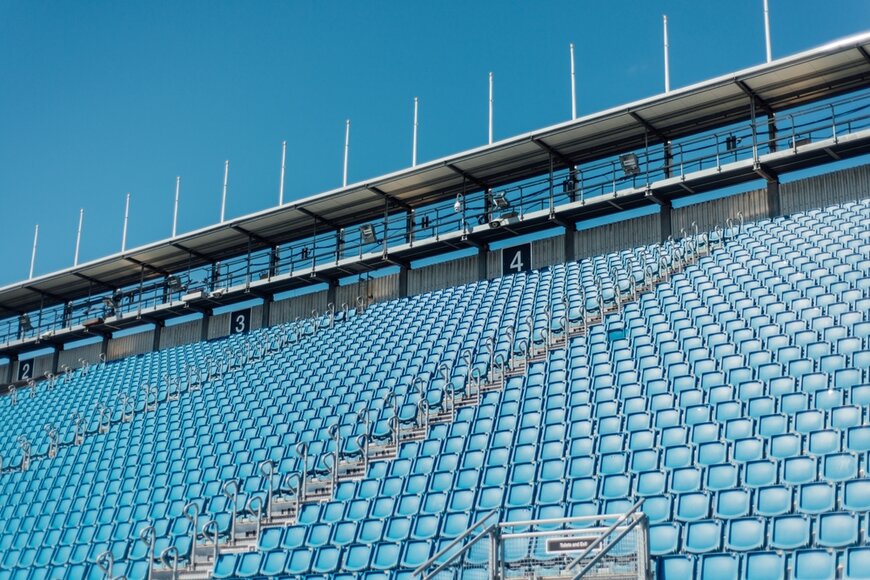
Stadiums and arenas are increasingly operating as multi-use environments, hosting sports, concerts, conferences, hospitality and retail activities throughout the year. This creates changing crowd patterns, access requirements and security risks that conventional video monitoring can struggle to manage efficiently.
AI-powered video analytics can support security teams by automatically detecting defined events and objects across camera networks, reducing the need for operators to continuously observe large numbers of video feeds.
Security Requirements for Large Public Venues
Security planning is becoming particularly relevant for UK venue operators ahead of the implementation of the Terrorism (Protection of Premises) Act 2025, commonly known as Martyn’s Law.
The legislation introduces requirements for organisations responsible for publicly accessible premises to consider measures that can reduce vulnerability to terrorist attacks and improve their ability to respond. For premises accommodating 800 people or more, this can include evaluating physical protection measures and operational procedures.
Video surveillance forms one part of this broader security infrastructure by providing information that can support evacuation, lockdown, communication and incident-response procedures.
Automating Video Monitoring
Traditional surveillance relies heavily on operators identifying relevant activity across multiple camera feeds. AI video analytics changes this workflow by analysing video streams for predefined objects, behaviours or conditions.
Systems can detect people and vehicles, identify movement across virtual lines, monitor occupancy or congestion and generate alerts when specified conditions occur. Multiple analytics rules can also be combined. For example, an alert could be generated when a person crosses a defined boundary and remains within a restricted area for a specified period.
Metadata generated by object detection can provide additional characteristics such as clothing colour and direction of movement, helping operators locate people or vehicles across a large venue.
Improving Situational Awareness
During an incident, security teams can use live video to monitor crowd movements, identify bottlenecks and determine where people are moving within or around a venue.
Modern surveillance networks can combine different camera formats, including dome, bullet, fisheye, pan-tilt-zoom, thermal and multidirectional cameras. Resolution options commonly range from 1080p to 4K, allowing camera selection according to coverage area and identification requirements.
Information obtained from these systems can also support coordination between control-room personnel, ground teams and emergency services.
Faster Video Investigation
AI-generated metadata can reduce the time required to review recorded footage. Instead of manually examining hours of video, operators can filter recordings according to detected characteristics or activity.
Some video management systems also support semantic search, allowing users to describe an event or object using natural-language queries. Other analytics functions can identify motion within a selected area or locate visually similar objects across multiple cameras.
Operational Uses Beyond Security
The same video infrastructure can provide operational data on queue lengths, crowd movement, congestion, vehicle flows and space utilisation.
For multi-use venues, these measurements can help operations teams adjust staffing, cleaning, access management and other resources as layouts and visitor patterns change between sporting events, concerts and corporate functions.
AI video analytics therefore extends conventional surveillance from passive recording toward automated event detection and searchable operational data. Its effectiveness, however, depends on appropriate camera coverage, analytics configuration and integration with the venue’s wider security and incident-response procedures.
Edited by Sucithra Mani, Induportals editor – adapted by AI.
www.hanwhavision.com
