
smartbuildingmag.com
03
'26
Written on Modified on
Danfoss Expands AB-QM PICV Range for Higher-Flow HVAC Applications
Redesigned AB-QM pressure independent control valves deliver higher flow capacity, lower pressure requirements and greater design flexibility for HVAC and district cooling applications.
www.danfoss.com
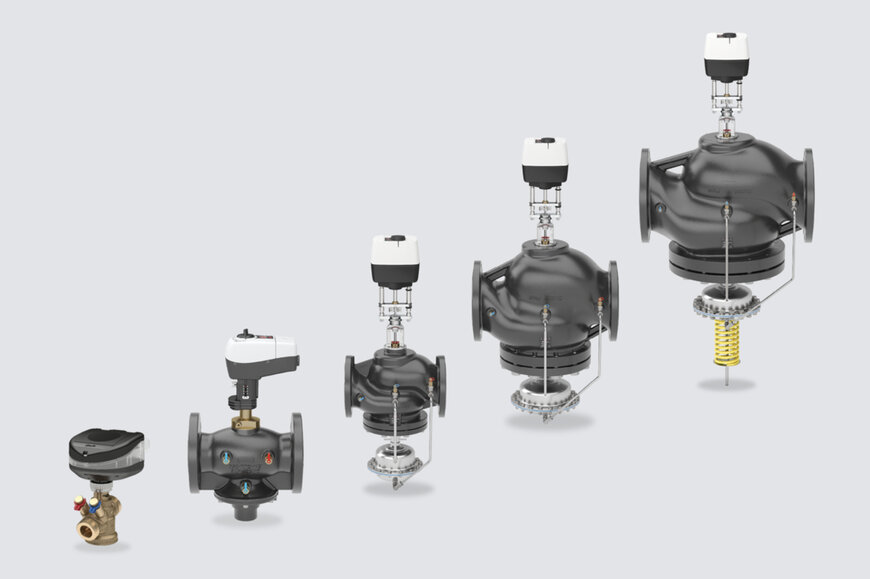
Danfoss plans to expand its fluid control infrastructure by introducing redesigned pressure independent control valves in sizes DN 125 through DN 250. This updated mechanical control technology targets large-scale heating, ventilation, air conditioning, and district cooling networks by accommodating elevated flow parameters while lowering differential pressure requirements.
Hydronic System Optimization And Flow Regulation
The redesigned control valves feature nominal flow rate increases ranging from 5 to 60 percent, with an average volumetric capacity increase of 30 percent across the product series. This flow expansion permits engineers to achieve greater fluid transfer volumes using equivalent valve dimensions, facilitating cost-efficient fluid distribution architectures. The mechanical update introduces two Super High Flow models designed explicitly for industrial cooling demands. The DN 250 SHF model manages a nominal flow of 600 cubic meters per hour with an 80 kilopascal starting pressure, while the DN 250 SHF+ variant regulates up to 670 cubic meters per hour requiring a 100 kilopascal starting pressure. These specifications directly support high-load applications such as data center thermal management and municipal district cooling.
Differential Pressure Reduction And Actuator Integration
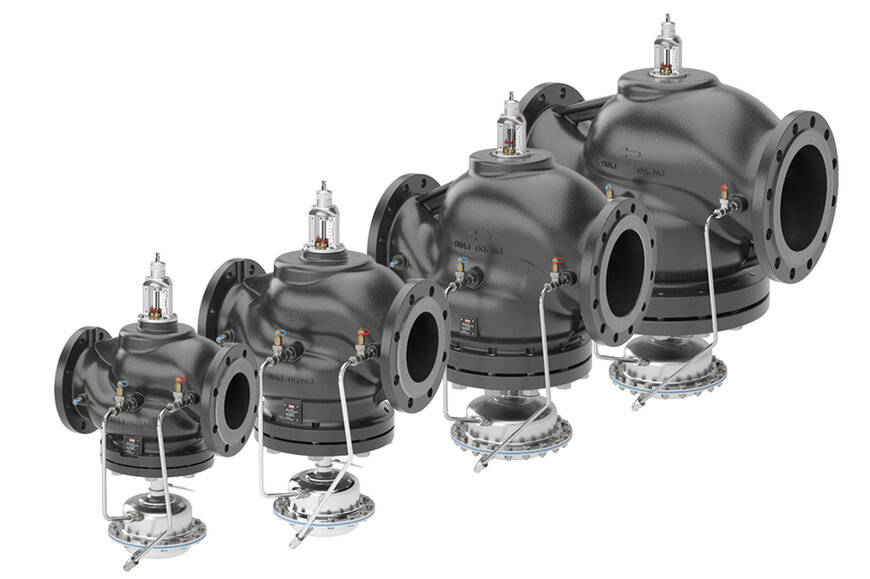
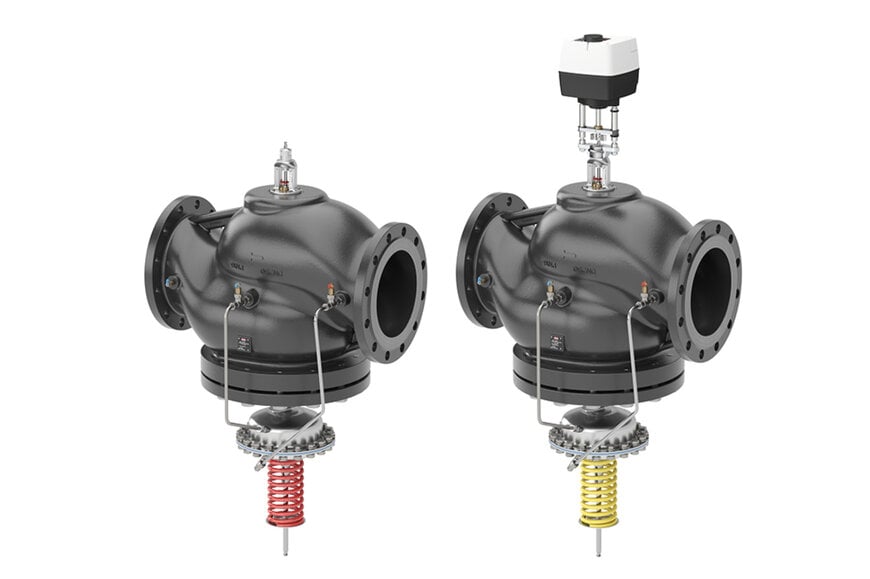
The updated valve architecture lowers the mechanical starting pressure requirement to 40 kilopascals for standard models and 60 kilopascals for standard high-flow configurations. This reduction in hydraulic resistance decreases the overall energy demand placed on circulation pumps, allowing system designers to specify smaller pumping equipment. The internal mechanism redesign also decreases the required actuation force. Consequently, the larger DN 200 and DN 250 valve bodies operate with standard-force actuators rather than requiring heavy-duty digital actuation units, reducing the physical installation footprint and initial equipment costs. Despite the lower starting resistance, the maximum allowable differential pressure threshold for the entire valve range has increased from 600 kilopascals to 800 kilopascals, providing an expanded hydraulic safety margin in demanding distribution networks.
Pressure-Independent Operational Stability
The core fluid regulation mechanics maintain a valve authority approaching 100 percent through automatic internal pressure balancing. This mechanical characteristic ensures that the designated flow rate remains constant across varying system load conditions, regardless of pressure fluctuations elsewhere in the hydronic network. The equipment provides a control range ratio of 1:1000, enabling highly accurate thermal output regulation and stable fluid distribution across extensive piping networks.
Additional Context:
This section details technical specifications and competitive benchmarking not included in the original product announcement
In the large-diameter pressure independent control valve market, performance is evaluated based on flow capacity per nominal diameter, minimum required differential pressure, and maximum differential pressure limits. Comparable hydronic regulation technologies in the DN 125 to DN 250 category include the Belimo EPIV series and the IMI TA-Smart range. Standard benchmarking prioritizes the reduction of minimum starting pressure, as this directly dictates the required pump head and subsequent electrical consumption of the chilled water distribution system. The ability to achieve 670 cubic meters per hour in a DN 250 footprint while utilizing lower-force actuators represents a specific engineering response to the spatial constraints and high thermal loads typical of data center infrastructure. Furthermore, a 1:1000 control ratio exceeds the industry baseline for standard modulating valves, providing the micro-adjustment capability necessary for strict temperature adherence in critical cooling applications.
Edited by Natania Lyngdoh, Induportals editor, assisted by AI.
www.danfoss.com
