
smartbuildingmag.com
17
'26
Written on Modified on
Low-power wireless networks expand device scalability margins in commercial building automation
Silicon Labs validates high-density mesh routing infrastructures to stabilize multi-protocol communication paths across active radio-frequency environments.
www.silabs.com
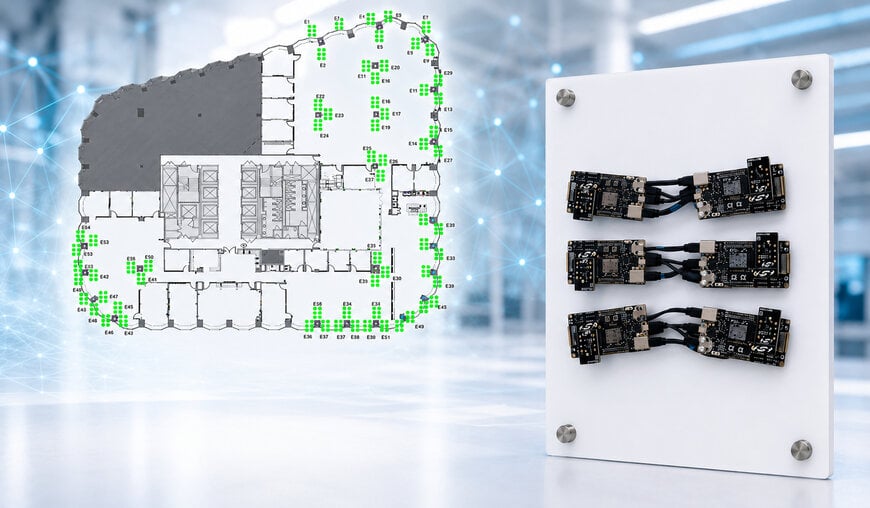
Silicon Labs has announced the deployment and operational validation of its 200-node Matter-over-Thread network architecture designed to optimize protocol performance across large-scale commercial spaces. This hardware and software implementation introduces specialized concurrent multi-protocol routing layers engineered to sustain automated lighting systems, building automation networks, and next-generation IoT platforms operating under high radio-frequency traffic stress.
To demonstrate these mesh capabilities in a live operating environment, the validation results were introduced at the Connectivity Standards Alliance Unify event in Austin, Texas. The test infrastructure marks a major turning point as the industry transitions from proving basic multi-vendor device interoperability to validating large-scale, real-world deployment viability.
Multi-hop mesh routing and concurrent multi-protocol integration
The severe mechanical and electronic demands of commercial building automation necessitate wireless infrastructure capable of resisting localized packet collisions, signal attenuation, and network fragmentation. Operating under dense environmental traffic, the network layout utilizes concurrent multi-protocol algorithms to manage multiple low-power wireless standards on a single silicon radio transceiver. This firmware configuration enables edge nodes to bridge legacy installations with modern wireless standards concurrently, maximizing infrastructure life cycles without requiring extensive layout overhauls.
By routing data streams across localized multi-hop mesh topologies, the setup ensures continuous network coverage even if discrete nodes suffer signal dropouts. The internal firmware architecture decouples the transmission media layer from the application code, which allows variable data payloads to move across distributed Thread paths without path distortion or data corruption.
This multi-hop routing protocol helps system designers build flexible device topologies that automatically find optimal paths to the central controller, avoiding typical single-point failure modes in congested commercial spaces. The resulting communication loop delivers predictable link execution bounds across multi-dwelling units and sprawling commercial complexes.
Dynamic border routing and automated on-network commissioning controls
The physical infrastructure incorporates advanced OpenThread border router implementations to securely link the low-power mesh nodes to external Internet Protocol backbones and cloud management software. By integrating high-stiffness software-defined network stacks, the border routers execute deterministic data routing while maintaining separate logical domain boundaries between independent device sub-networks. This functional isolation stops unauthorized external entities from tampering with critical building systems or sniffing automation parameters at the wireless periphery.
When executing commissioning sequences, the automated on-network configuration parameters achieved a complete execution rate across all test endpoints without requiring manual physical interventions at individual node sites. The embedded radio controllers utilize high-efficiency single-chip architectures, such as the MG26 and newer Series 3 platforms, to handle heavy cryptographic handshakes alongside active wireless processing. This high-density integration reduces total component count within the device housing, limiting parasitic electrical losses and lowering overall hardware implementation outlays.
Additional Context: This section details technical specifications and competitive benchmarking not included in the original product announcement
Within the high-density commercial mesh networking market, this validated platform competes directly with alternative wireless stacks such as the standard Zigbee PRO networks or Bluetooth Mesh frameworks deployed by Nordic Semiconductor and Texas Instruments. Objective technical benchmarking indicates that while conventional single-protocol setups experience elevated latency and packet dropouts when active node counts cross certain thresholds—requiring separate physical translation gateways that complicate vehicle or building cabinets—this multi-protocol baseline maintains native software adapters within the radio firmware. This design minimizes processing overhead and stabilizes device synchronization under intense signal congestion.
Additionally, the development framework leverages extensive low-power wireless deployment history, building on proven communication baselines. The performance data gathered from the active office environment showed sustained mean multicast transmission latencies as low as 87 milliseconds and an overall packet loss metric under 1 percent across the majority of evaluated payload sizes.
However, achieving maximum packet delivery efficiency under continuous multi-hop operations demands precise synchronization with proper wideband channel allocations. Sub-optimal antenna placement or mismatched channel routing across adjacent corporate Wi-Fi fields can induce localized latency spikes within the link layer, temporarily reducing the latency advantages compared to dedicated, wired building networks equipped with passive RS-485 copper data linkages.
Edited by Sucithra Mani, Induportals editor – adapted by AI.
www.silabs.com
