
smartbuildingmag.com
27
'26
Written on Modified on
Durin Selects Silicon Labs Wireless SoC for Aliro Mobile Access
Silicon Labs provides the secure multiprotocol foundation for Durin Door Manager, enabling seamless Aliro-ready NFC tap-to-unlock and hands-free smartphone experiences for next-generation smart lock systems.
www.silabs.com
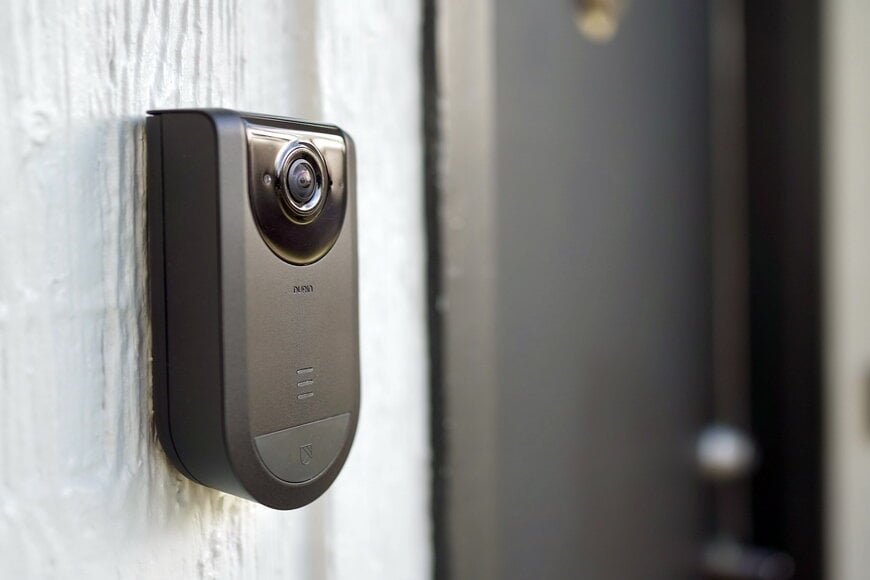
Silicon Labs’ MG24 wireless System-on-Chip (SoC) has been chosen by Durin, Inc. as the foundational controller for its Durin Door Manager access device, aligning with the newly released Aliro specification for mobile access in smart locks and readers. The selection highlights the MG24’s positioning in the emerging interoperable mobile access market, where standardized credential handling and low-power, multiprotocol operation are becoming table stakes.
Enabling Standardized Mobile Access with Aliro
The Connectivity Standards Alliance (CSA) recently published the Aliro 1.0 specification, a cross-platform standard intended to unify mobile access control across smartphones, wearables, and reader hardware without reliance on proprietary apps or cloud connectivity. Aliro supports multiple wireless transports—Near-Field Communication (NFC), Bluetooth® Low Energy (BLE), and Ultra-Wideband (UWB)—to facilitate secure tap-to-unlock and proximity-based hands-free access while preserving user privacy through asymmetric cryptography.
In this context, Durin’s Door Manager is designed from the outset to meet Aliro’s requirements for secure credential validation and flexible transport support, a departure from legacy access systems that have historically depended on fragmented, vendor-specific protocols.
Integrated Security and Multiprotocol Connectivity
At the core of the Durin Door Manager, the MG24 SoC consolidates several critical functions. It performs secure credential validation in a single NFC transaction and executes cryptographic operations—such as elliptic-curve key generation and verification—using an integrated hardware accelerator. The SoC also provides protected key storage and hardware-based device security, which are essential for meeting Aliro’s stringent trust requirements.
Beyond NFC, the MG24 supports BLE for device commissioning and control workflows, and it can interface with a companion UWB radio to make hands-free access decisions based on proximity data. This multiprotocol approach enables a single hardware platform to address a range of use cases—tap-to-unlock, walk-up access, and hybrid models—without requiring separate chips or complex external processing.
Differentiation Through Standards-Based Interoperability
The combination of MG24 and Aliro represents a shift away from proprietary smart lock ecosystems toward a standards-based model that promotes interoperability across devices and manufacturers. Because Aliro is supported by major platform providers and designed to work natively with digital wallets on both Android and iOS, it reduces integration friction and broadens the potential user base for compliant access products.
For device makers, using an SoC that is purpose-built to implement Aliro’s transport flexibility and security model simplifies design and accelerates time to market. The MG24’s low-power architecture is also important for battery-powered door hardware, where efficient operation and sustained performance are critical commercial requirements.
Market Context and Availability
The adoption of Aliro comes as the smart lock market increasingly prioritizes seamless mobile access and cross-platform support. With Apple, Google, Samsung, and other major industry players backing Aliro, the standard has the potential to overcome long-standing compatibility barriers in connected access control. Initial product implementations like the Durin Door Manager—expected in the first quarter of 2026—demonstrate how hardware platforms such as the MG24 are enabling early industry alignment with these new interoperability goals.
www.silabs.com
