
smartbuildingmag.com
22
'26
Written on Modified on
Thermal management solutions for AI data centers
Johnson Controls showcases energy-efficient cooling and thermal management technologies at Data Center World 2026.
www.johnsoncontrols.com
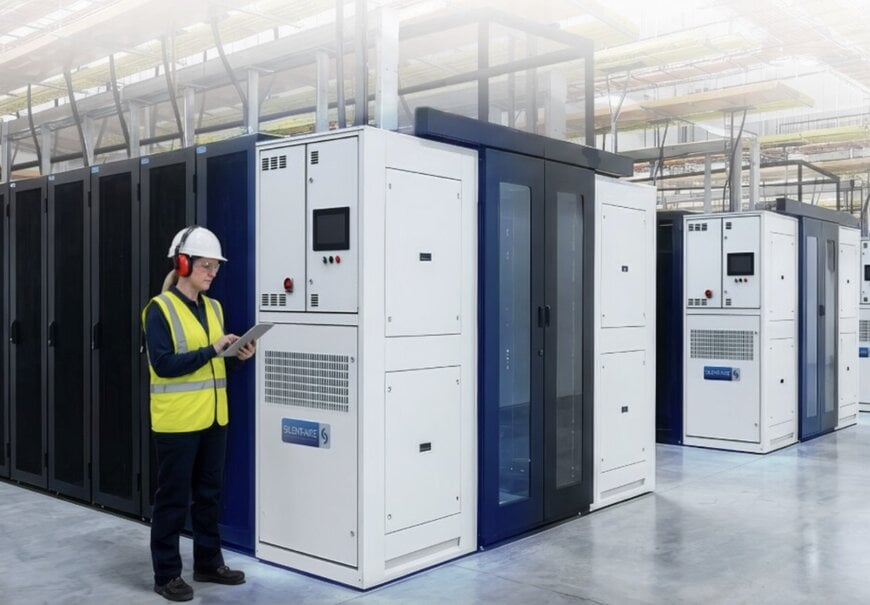
Johnson Controls will present a suite of thermal management innovations at Data Center World 2026, held April 20–23 in Washington, D.C. The technical focus centers on addressing the projected doubling of global data center electricity demand by 2030, specifically targeting the 30% to 40% of energy consumption typically attributed to cooling infrastructure.
Capacity Density and Chiller Engineering
The company will showcase engineering advancements designed to reduce the physical footprint of thermal management while increasing cooling output. Central to this is the YDAM magnetic bearing chiller, which provides 3.5 MW of cooling capacity. This system achieves a 20% capacity density increase over current market alternatives, addressing the spatial constraints of high-density AI clusters.
Additionally, the YK-HT two-stage economized centrifugal chiller will be highlighted for its operational versatility. The unit is approximately 30% smaller than comparable systems and requires up to 60% fewer dry coolers. This driveline configuration allows for the industry’s widest operating range, enabling data centers to maintain power usage effectiveness (PUE) across variable environmental conditions and compute loads.
Liquid Cooling and Two-Phase Extraction
To support the rapid growth of the automotive data ecosystem and AI-driven workloads, Johnson Controls is expanding its liquid cooling portfolio through the following technical deployments:
- Silent-Aire Coolant Distribution Units (CDU): A scalable platform providing cooling capacities ranging from 500 kW to over 10 MW.
- Direct-to-Chip Technology: Through a strategic investment in Accelsius, the company is integrating two-phase liquid cooling. This method utilizes the latent heat of vaporization (phase change) to extract heat from chips more efficiently than single-phase liquid or air-cooling methods.
- Advanced Materials Science: The pending acquisition of Alloy Enterprises will integrate proprietary direct liquid cooling components into the mechanical thermal chain.
Waste Heat Recovery and Resource Efficiency
A critical strategy for reducing grid dependence involves the use of YORK absorption chillers. In facilities utilizing on-site natural gas turbines or fuel cells, these chillers capture the 50% to 65% of energy typically lost as waste heat. By converting this thermal energy into cooling, operators can reduce chiller-related electricity consumption by over 90%, effectively reallocating that power capacity to IT equipment.
To assist in the deployment of these complex architectures, Johnson Controls will release its Thermal Management Reference Design Guide Series. These technical blueprints provide mapped thermal chains tailored to specific compute densities and geographic elevations, starting with water-cooled chiller plants and expanding into air-cooled and two-phase architectures. These strategies are projected to reduce non-IT energy consumption by more than 50% in major North American data center hubs.
Edited by Romila DSilva, Induportals Editor, with AI assistance.
A critical strategy for reducing grid dependence involves the use of YORK absorption chillers. In facilities utilizing on-site natural gas turbines or fuel cells, these chillers capture the 50% to 65% of energy typically lost as waste heat. By converting this thermal energy into cooling, operators can reduce chiller-related electricity consumption by over 90%, effectively reallocating that power capacity to IT equipment.
To assist in the deployment of these complex architectures, Johnson Controls will release its Thermal Management Reference Design Guide Series. These technical blueprints provide mapped thermal chains tailored to specific compute densities and geographic elevations, starting with water-cooled chiller plants and expanding into air-cooled and two-phase architectures. These strategies are projected to reduce non-IT energy consumption by more than 50% in major North American data center hubs.
Edited by Romila DSilva, Induportals Editor, with AI assistance.
