
smartbuildingmag.com
30
'26
Written on Modified on
Cloud-Connected Fire Detection Systems for Autonomous Building Infrastructure
Siemens Smart Infrastructure introduced the Sinteso Nova and Cerberus Nova portfolios to transition fire safety from periodic manual testing to continuous, data-driven supervision.
www.siemens.com
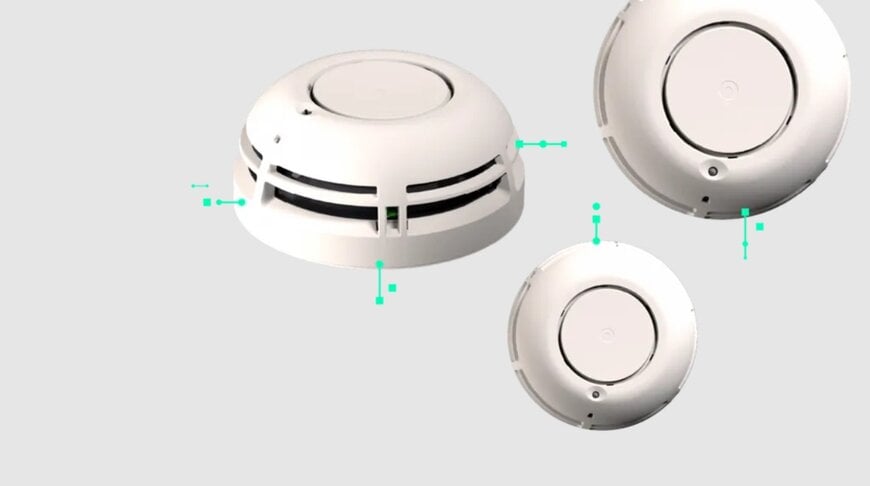
The Sinteso Nova and Cerberus Nova systems utilize IoT-enabled hardware to provide proactive fire protection across the automotive data ecosystem, healthcare facilities, data centers, and commercial real estate. By integrating cloud-based connectivity, these detectors facilitate the transition toward autonomous buildings through real-time monitoring and automated maintenance protocols. The technology is designed for both new installations and the modernization of existing brownfield sites, maintaining compatibility with established fire control panels to prevent the necessity of full system replacements.
Automated Testing and Disturbance-Free Operations
The core of the new portfolio is Disturbance-Free Testing (DFT) technology, which performs autonomous self-checks on a continuous basis. This mechanism reduces system downtime by identifying potential sensor drift or hardware failures without requiring manual intervention or onsite physical testing. To complement this, Smoke Entry Supervision (SES) monitors smoke entry points in real time, providing a diagnostic layer that identifies physical obstructions or environmental factors that could impede sensor performance.
In high-stakes environments such as data centers and healthcare, these automated features ensure that critical IT infrastructure and patient care areas remain protected with minimal operational disruption. The integration of ASAplus technology — which employs multi-wavelength optical sensors and dual thermal detection — further stabilizes the system against false alarms by distinguishing between actual fire signatures and non-threatening environmental phenomena.
Connectivity and the Digital Supply Chain
As part of a broader digital supply chain for building management, these detectors are fully compatible with cloud-based platforms like Building X. This connectivity enables remote diagnostics and predictive maintenance by providing facility managers with shared, actionable data insights. For organizations managing distributed building portfolios, such as universities or large-scale commercial real estate, this allows for centralized oversight and a standardized safety response across multiple geographic locations.
Peter Nebiker, Head of Fire Safety at Siemens Smart Infrastructure Buildings, noted that the transition from periodic checks to self-supervising systems establishes a foundation for human-centric, autonomous buildings by automating testing and enabling remote action.
Integration and Environmental Standards
The Sinteso Nova and Cerberus Nova systems are designed for plug-and-play integration, allowing for the automatic transfer of configured settings during upgrades. This backward compatibility with existing fire panels reduces installation time and limits the risks associated with hardware migration.
The hardware is produced in Switzerland and carries the Siemens EcoTech label, indicating the use of recycled plastics and adherence to circular economy principles. As part of the Siemens Xcelerator open digital business platform, the portfolio supports scalable digital transformation by allowing users to integrate fire safety data into wider building automation and energy management systems.
Edited by Evgeny Churilov, Induportals Media - Adapted by AI.
www.siemens.com
