
smartbuildingmag.com
19
'26
Written on Modified on
Pressure sensor for flammable refrigerants in HVAC/R systems
The WIKA R-1 model enables reliable measurement in HVAC/R systems using A3 refrigerants, meeting safety and leak-tightness requirements.
www.wika.com
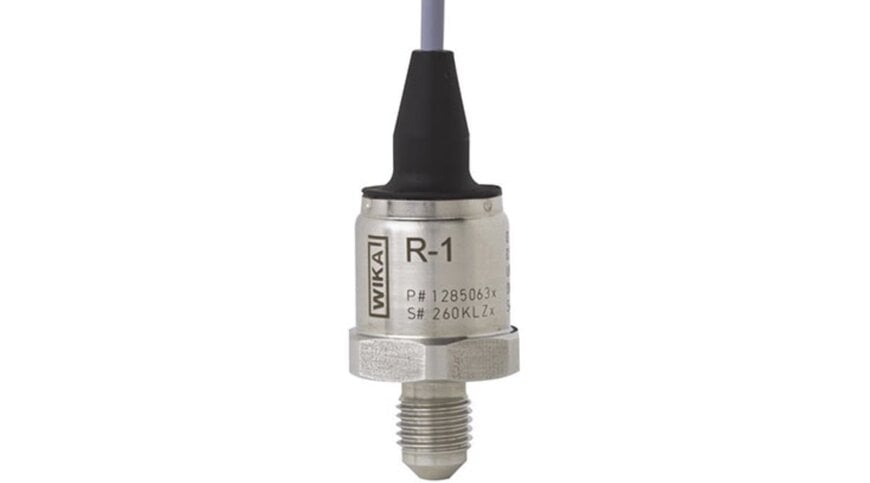
The R-1 pressure sensor is designed for HVAC/R applications using flammable refrigerants such as R290, offering measurement stability, resistance to demanding conditions, and compliance with safety standards.
Adaptation to low-GWP refrigerants
The transition to natural refrigerants with low global warming potential (GWP), such as propane (R290), is redefining design requirements in HVAC/R systems. These refrigerants, classified as A3 due to their flammability, require measurement solutions that minimize leakage risks and ensure safe operation throughout the equipment lifecycle.
In this context, the R-1 sensor has been electronically updated for use in applications with flammable refrigerants, providing a solution compatible with stricter regulatory environments. Standards such as IEC 60335-2-40 define specific requirements for heat pumps and air conditioning systems using these fluids.
Elastomer-free design and long-term tightness
The R-1 features a mechanical design aimed at reducing potential leakage points. The measuring cell is directly welded to the process connection, eliminating the need for elastomer seals. This approach improves long-term leak-tightness, especially in systems exposed to thermal cycles and vibrations.
All wetted parts are made of stainless steel, ensuring compatibility with refrigerants, oils, and additives present in refrigeration circuits. This construction contributes to the sensor’s durability in industrial and commercial applications.
For applications requiring maximum sealing integrity, the sensor can be supplied with a copper tube connection for brazing, enabling a permanent joint without elastomer components.
Resistance to condensation and environmental validation
Operating conditions in HVAC/R systems often involve significant temperature differences between ambient air and the refrigerant, which can lead to condensation and affect sensor electronics. To validate its performance in such environments, the R-1 undergoes climatic chamber testing for 500 hours of continuous operation under high humidity and low fluid temperatures.
These tests verify both leak-tightness and signal stability under conditions representative of real operation, which is particularly important for critical applications where service continuity is essential.
Measurement ranges and applications
The sensor is available in measurement ranges suitable for monitoring both low-pressure and high-pressure sides (LP/HP) in R290 circuits. Its applications include commercial and industrial refrigeration, air conditioning, and heat pumps.
Additionally, its adoption is growing in data center cooling systems, where 24/7 operation, control stability, and safe refrigerant management are key factors.
Manufacturing and quality control
For OEM applications, the R-1 is supplied with structured manufacturing processes and quality controls, including 100% end-of-line testing. Services such as custom labeling and supply continuity options are also available.
Overall, these features enable integration of the sensor into modern HVAC/R systems that require high safety levels, compatibility with flammable refrigerants, and long-term measurement stability.
Edited by Romila DSilva, Induportals editor, with AI assistance.
www.wika.com
