
smartbuildingmag.com
03
'26
Written on Modified on
Siemens Advances Autonomous Building Infrastructure
At Light + Building 2026 in Frankfurt, Siemens presents technologies that integrate Industrial AI, smart electrification, and building platforms to enable autonomous building operations.
www.siemens.com
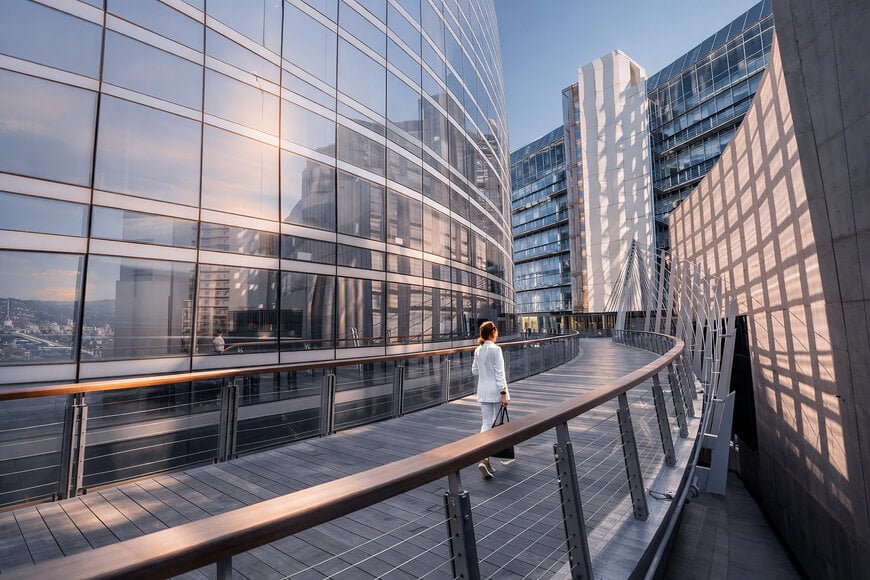
At Light + Building, held March 8–13 in Frankfurt, Germany, Siemens AG outlined its approach to transitioning from conventional smart buildings to autonomous building infrastructure. The concept combines Industrial AI, digital building management, and intelligent power distribution to improve energy performance, operational efficiency, and lifecycle value across sectors such as healthcare, data centers, life sciences, commercial real estate, and higher education.
From Smart to Autonomous Operations
Autonomous buildings represent an evolution of building automation systems. While traditional smart buildings rely on rule-based controls and centralized supervision, autonomous systems use continuous data acquisition, predictive analytics, and AI-based optimization to anticipate demand, adjust performance parameters, and schedule maintenance dynamically.
This approach addresses technical challenges including workforce shortages in facility management, increasing energy efficiency requirements, and the need for integration with distributed energy resources. By embedding Industrial AI into building control architectures, operators can shift from reactive maintenance toward predictive and condition-based strategies, reducing unplanned downtime and improving asset utilization.
Digital Platforms for Integrated Management
A central element of Siemens’ architecture is its digital building platform, Building X, which consolidates operational data from energy systems, HVAC, lighting, and safety infrastructure into a unified digital environment. Through standardized data models and interoperable APIs, the platform supports cross-domain analytics, enabling data-driven optimization across the building lifecycle.
Desigo CC, the company’s building management system, integrates HVAC, lighting, fire safety, security, and energy monitoring within a scalable control framework. Its open architecture and backward compatibility facilitate integration into existing IT and operational technology environments. This reduces system fragmentation while enabling resilience, cybersecurity compliance, and phased modernization strategies—key requirements for complex infrastructures such as hospitals and data centers.
Electrification as the Structural Backbone
Autonomous functionality depends on reliable and transparent electrical infrastructure. Siemens combines intelligent power distribution systems, IoT-enabled components, and digital planning tools to create a measurable and traceable energy framework.
Engineering software such as SIMARIS with BIM integration supports electrical design based on standardized modeling workflows. At the hardware level, SENTRON protection devices and SIVACON 8PS busbar trunking systems provide monitored and modular power distribution. These systems enable load transparency, facilitate integration with renewable sources, and support interaction with increasingly complex energy systems, including microgrids and demand-response environments.
For smaller-scale automation tasks, Siemens introduced LOGO! 9, the next generation of its compact logic module series. LOGO! 9 expands program capacity and input/output scalability, incorporates improved on-device diagnostics, and supports secure connectivity protocols. These enhancements enable faster implementation of localized control and monitoring applications while maintaining compatibility with broader building automation networks.
Application Across High-Demand Environments
In healthcare and life sciences facilities, autonomous building systems can maintain strict environmental parameters while optimizing energy consumption through adaptive control. In data centers, predictive energy management and load balancing contribute to higher uptime and resilience. Commercial real estate operators can use cross-domain analytics to monitor energy intensity, occupancy patterns, and maintenance cycles, supporting compliance with sustainability frameworks and improving long-term asset valuation.
By integrating building technologies with intelligent electrification and Industrial AI, Siemens positions autonomous infrastructure as a foundation for a digital supply chain within the built environment. The convergence of operational data, energy management, and automation technologies forms a scalable architecture that supports measurable performance outcomes rather than isolated system optimization.
Siemens presented these technologies at Hall 11.0, Booth B56 during Light + Building 2026, demonstrating how autonomous buildings can transition from conceptual vision to deployable infrastructure.
www.siemens.com
