
smartbuildingmag.com
21
'25
Written on Modified on
Econ Solutions’ smart load management cuts peak electricity costs
Germany’s rising grid fees challenge businesses; intelligent load management reduces peak loads, stabilizes consumption, and cuts electricity costs.
www.econ-solutions.de
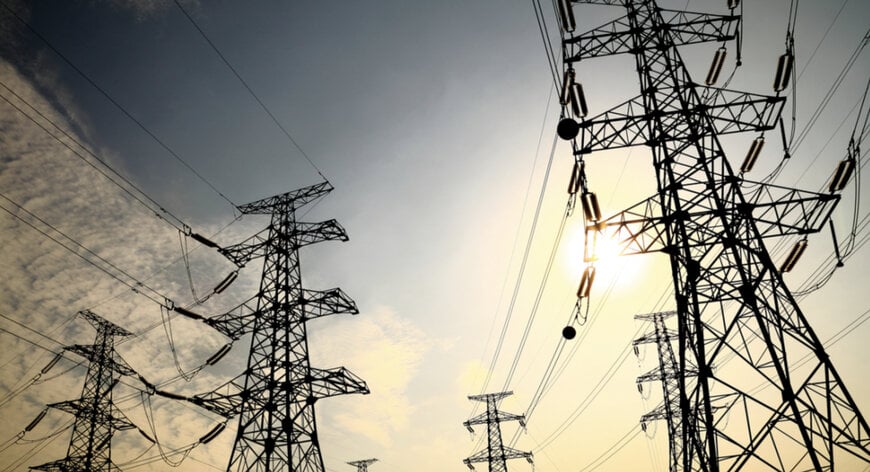
Grid charges are fees for using the electricity grid. In Germany, they account for a significant portion of electricity costs. Households pay only the energy price. However, customers who consume more than 100,000 kilowatt hours per year also pay the costs for the annual peak power used.
In recent years, grid fees for electricity have risen significantly – in one grid area by approximately 56 percent within five years. The reasons are grid expansion, the integration of renewable energies, and new power lines as part of the energy transition. In 2024, fees doubled nationwide from 3.12 to 6.43 cents per kilowatt hour – partly due to the elimination of government subsidies. This represents an additional burden for companies.
In addition to peak loads, grid serviceability is becoming a greater focus of load management. This, too, is gaining importance with the energy transition – and brings with it new challenges and opportunities.
Grid service means more than just limiting maximum power consumption. Companies should reduce their consumption or feed in electricity during periods of low power generation, and purchase more electricity when there is a surplus to stabilize the grid.
Peak loads mean higher costs
The electricity price essentially consists of a base price, a work charge, and a demand charge. The latter also includes the grid fees charged by the grid operator to the supplier. It only applies to companies with an annual consumption of more than 100,000 kilowatt hours.
Above this threshold, the Electricity Grid Access Ordinance requires load measurements every quarter of an hour. The load profile shows a customer's consumption behavior over time. The basis for the demand charge is the highest 15-minute average of the measured electricity consumption. A short-term load peak—for example, due to the simultaneous start-up of several machines—can thus result in high costs, even if the annual average load is low. The basic principle: The higher the load peaks, the higher the grid charges.
Avoid peak loads with load management
Aintelligent load managementThis makes it a key strategy against rising grid charges. With the right system, electricity consumption can be controlled in such a way that peak loads don't even occur. These make electricity more expensive – regardless of their duration.
Load management usually pays off quickly. If the annual peak power drops by 50 kilowatts, a system pays for itself in the first year – at a power price of €170 per kilowatt.
Versatile applications
Load management isn't just beneficial for large consumers. It also helps optimize self-consumption when generating your own electricity. It's also useful in situations where technical constraints exist—such as limited transformer capacity—and for grid-friendly behavior.
It can be used in various areas, including:
- Charging stations: Peak loads prevent unnecessary costs in times of high electricity prices
Without load management,Charging stationsFor electric cars, this can quickly cause peak loads and drive up electricity costs. An intelligent system controls the charging power when the grid is overloaded, a peak is imminent, or electricity prices are rising. This ensures that all vehicles are charged reliably – without exceeding the connected load or unnecessarily increasing the power price.
- Industrial plants: “Peak shaving”
In industry, load management smooths out peak loads (“peak shaving”) and thus reduces power prices. Networked machines such as ventilation systems, heating furnaces, compressed air units, pumps orCold storageare controlled automatically. In addition, consumption can be linked to market prices – with the goal of using less electricity during expensive periods and taking advantage of cheaper times.
- Commercial kitchens: Utilizing optimization potential
In commercial kitchens, there is often unrecognized optimization potential. In this area, peak loads can be avoided by temporarily switching off kitchen appliances (e.g., steam cookers, instantaneous water heaters, or air conditioning systems) without disrupting the process.
- PV systems: shifting electricity loads
Operator ofPV systemsLoad management can absorb power peaks and reduce the load on the grid connection. This allows consumption to be shifted to times of peak self-production. This reduces grid consumption – and charges for negative electricity prices can be avoided.
- Power storage: absorb peak loads and take advantage of market price fluctuations
Battery storageReduce peak electricity demand during operation. Load management stores surpluses and uses them specifically to absorb peaks from energy-intensive consumers. Additionally, the storage system can be charged when electricity prices are low or negative and discharged when prices are high – this reduces costs and can even generate profits.
Solutions for optimized load management
Technical solutions such as the plug-and-play econ peak controller from econ solutions support companies with load management. The system is flexible, expandable, and can be integrated into existing energy management systems. This not only helps companies avoid peak loads but also optimize their grid performance.
Conclusion
Rising grid fees and demands for grid serviceability pose challenges for industry and the real estate sector. Intelligent load management that connects and controls machines and systems prevents peak loads and reduces electricity costs. Since the responsibility lies with the end user, it's worthwhile to employ an energy management specialist like econ solutions to specifically control charging loads and implement customized system settings.
www.econ-solutions.com
Technical solutions such as the plug-and-play econ peak controller from econ solutions support companies with load management. The system is flexible, expandable, and can be integrated into existing energy management systems. This not only helps companies avoid peak loads but also optimize their grid performance.
Conclusion
Rising grid fees and demands for grid serviceability pose challenges for industry and the real estate sector. Intelligent load management that connects and controls machines and systems prevents peak loads and reduces electricity costs. Since the responsibility lies with the end user, it's worthwhile to employ an energy management specialist like econ solutions to specifically control charging loads and implement customized system settings.
www.econ-solutions.com
