
smartbuildingmag.com
06
'26
Written on Modified on
Building Automation Weather Station Modbus RTU Integration
Elsner Elektronik introduces the Windancer GPS Modbus weather station to streamline solar shading, storm protection, and meteorological telemetry in building automation systems.
www.elsner-elektronik.de
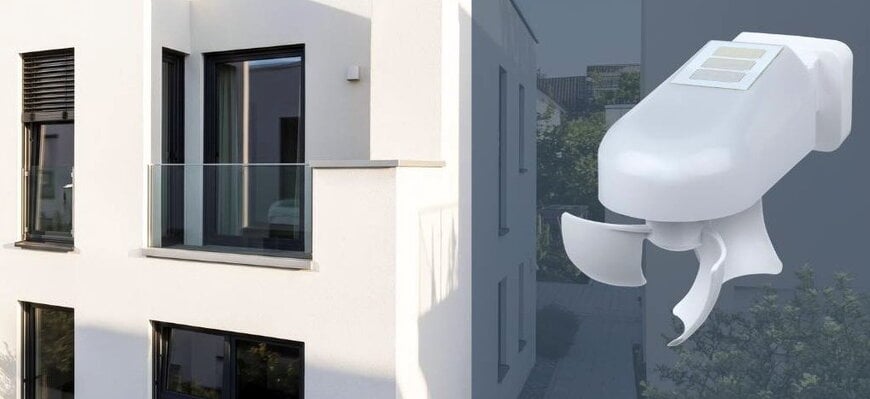
Modern commercial facilities and residential complexes face operational challenges when automating external venetian blinds, operable roof vents, and daylight-harvesting louvers. Mechanical shading surfaces require continuous wind velocity monitoring to prevent structural damage during gusts, while façade daylight management demands directional solar luminance data to optimize cooling loads and natural illumination. In conventional building automation architectures, fulfilling these operational requirements involves installing and commissioning multiple discrete sensors, including separate pyranometers, anemometers, rain detectors, and temperature probes. This distributed topology increases physical cabling requirements, consumes multiple controller input channels, and requires custom PLC programming to compute solar geometry for automated shading systems.
Consolidated Weather Instrumentation and Protocol Architecture
The Windancer GPS Modbus weather station addresses these installation and integration bottlenecks by housing multiple sensing elements and computational functions within a single IP44-rated enclosure. The unit acquires meteorological parameters across three distinct directional planes, providing independent ambient illuminance measurements for east, south, and west building façades across an operating range of 0 to 150,000 lux alongside twilight detection. Wind speed is recorded mechanically through a low-maintenance cup anemometer rated for 2 to 30 meters per second, ensuring mechanical protection systems deploy before high-velocity wind loads damage external blind assemblies. Precipitation is detected via an integrated heated sensor to trigger window and vent closures regardless of ambient moisture condensation, while ambient air temperatures are monitored from minus 25 to plus 50 degrees Celsius.
Fieldbus Integration and Automated Sun Position Computing
Beyond meteorological data acquisition, the unit incorporates an onboard GPS receiver that continuously derives precise geographic location and time coordinates to calculate solar position directly within the field device. Instead of requiring control engineers to implement complex astronomical algorithms on the central automation controller, the device computes solar azimuth and elevation angles internally and delivers ready-to-use values via serial communication.
The instrumentation communicates across building networks using the industrial Modbus RTU protocol over a balanced RS-485 physical layer. Featuring a 1/8 unit load transceiver, the device allows up to 256 physical transceivers on a single bus segment without overburdening RS-485 line drivers. Device addressing and communication parameters are configured directly through integrated hardware DIP switches, allowing commissioning technicians to configure network parameters without requiring dedicated software tools on site. The unit operates from an industry-standard 24 V DC safety extra-low voltage (SELV) auxiliary supply with an operating current draw of 70 milliamperes. For building projects requiring environmental telemetry without GPS-based solar angle calculation, Elsner Elektronik provides the standard Windancer Modbus configuration as a dedicated alternative.
Additional Contex
This section details technical specifications and competitive benchmarking not included in the original product announcement.
Building automation networks frequently encounter field integration challenges when legacy 0-to-10 V or 4-to-20 mA analog meteorological sensors are deployed across multi-story façades. Analog architectures require individual multi-conductor homerun wiring runs back to central I/O racks, making cable pull costs and analog input card expenditures significant cost drivers. Serial fieldbus standards such as Modbus RTU allow multiple physical environmental transmitters to share a single twisted-pair shielded trunk line (TIA/EIA-485-A standard).
In dynamic solar shading and daylight tracking systems, computing solar position has historically required specialized software function blocks within programmable logic controllers (PLCs) or direct-digital controllers (DDCs) conforming to DIN EN 15232 (energy performance of buildings). Standardized solar position algorithms, such as those published by the National Renewable Energy Laboratory (NREL), demand significant processing overhead and real-time clock synchronization. By shifting geographic positioning, real-time clock alignment, and astronomical coordinate transformation into the edge sensor via GNSS signals, controller scan cycles remain dedicated to primary HVAC and blind motor automation logic.
Edited by Evgeny Churilov, Induportals Media - Adapted by AI.
www.elsner-elektronik.de
