
smartbuildingmag.com
30
'26
Written on Modified on
Theben Unveils Meteodata 150 KNX Connected Weather Station
The all-in-one sensor optimizes facade control and energy efficiency via the KNX Data Secure protocol.
www.theben.de
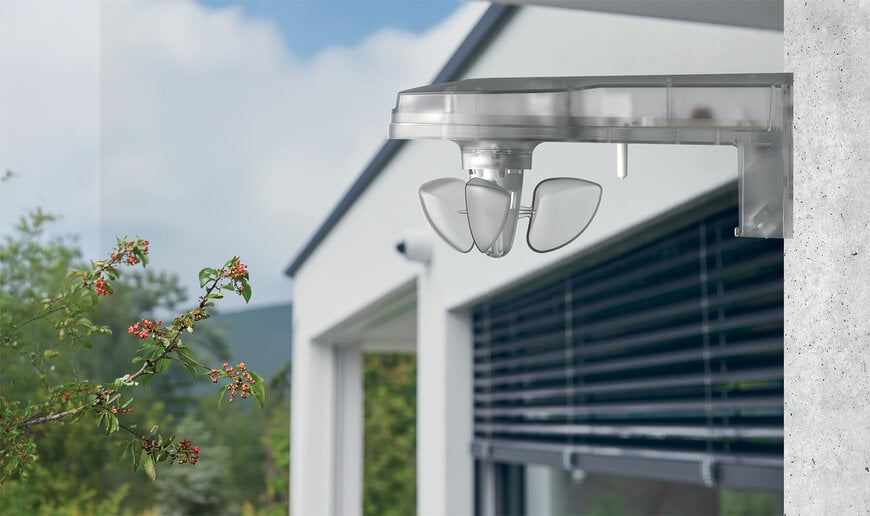
Theben has launched the Meteodata 150 KNX, a new generation of connected weather stations designed for the intelligent automation of residential and commercial buildings. By centralizing real weather conditions—such as wind speed, rainfall, humidity, atmospheric pressure, and global radiation—this all-in-one device allows buildings to dynamically adjust their functions without relying solely on predefined time schedules. Available in five versions (24 V or 230 V, with or without a GPS chip), the station natively integrates into the KNX smart home and building ecosystem.
Dynamic Facade Control and Solar Protection
At the heart of its architecture, the Meteodata 150 KNX features four brightness sensors oriented to the cardinal points. This spatial configuration allows the controller to independently manage up to 14 glass facades. Depending on sun exposure and trajectory, the system automatically adjusts the tilt of Venetian blind slats or the height of roller shutters. According to Franck Magnat, Marketing Director of Theben France, this differentiated management maximizes natural light intake while neutralizing glare and thermal overheating. Additionally, the station features 10 universal channels for creating logical safety automations, such as the emergency retraction of exterior blinds in the event of strong wind gusts measured by the integrated anemometer.
KNX Cybersecurity and Ease of Maintenance
Beyond its sensing capabilities, the station integrates the KNX Data Secure encryption protocol, guaranteeing the protection of building communications against cyberattacks and data manipulation. The device features an upgradable firmware and diagnostic functions integrated directly into the ETS configuration software, facilitating remote supervision and maintenance for integrators. Designed for the renovation market, the Meteodata 150 KNX retains full mechanical compatibility with the mounting base of the previous generation (Meteodata 140 KNX), enabling a quick hardware upgrade without requiring the existing infrastructure to be rewired.
Additional Context: Astronomical Solar Tracking and Building Thermics
This section details building physics and automation principles not included in the original press release.
In bioclimatic facade engineering, the active management of solar heat gain (the g-value of the glazing) is critical to minimize the energy consumption of heating, ventilation, and air conditioning (HVAC) systems. Unlike basic brightness sensors that abruptly react to a fixed lux threshold, an advanced weather station paired with a GPS receiver uses astronomical calculation algorithms. The microcontroller models the exact azimuth and elevation of the sun in real time, cross-referenced with the building's geographical coordinates. This spatial solar geometry makes it possible to anticipate the precise penetration of rays through the glazing. In summer mode, to reduce the cooling load, the KNX system adjusts the cut-off angle of the external venetian blinds (EVBs) to block direct infrared radiation while allowing diffuse visible light to pass through. In this architecture, "KNX Data Secure" encryption is vital: malicious interception of fieldbus frames (via spoofing) could force the blinds of an office tower to rise during a heatwave, quickly causing a thermal collapse of the infrastructure.
Edited by industrial journalist Lekshman Ramdas, with AI assistance.
www.theben.com
