
smartbuildingmag.com
02
'26
Written on Modified on
Residential Cold Climate Heat Pump Electrification
Trane Technologies introduces the Trane 20 TruComfort and American Standard AccuComfort Platinum 20 to eliminate sub-zero heating capacity degradation in residential buildings.
www.tranetechnologies.com
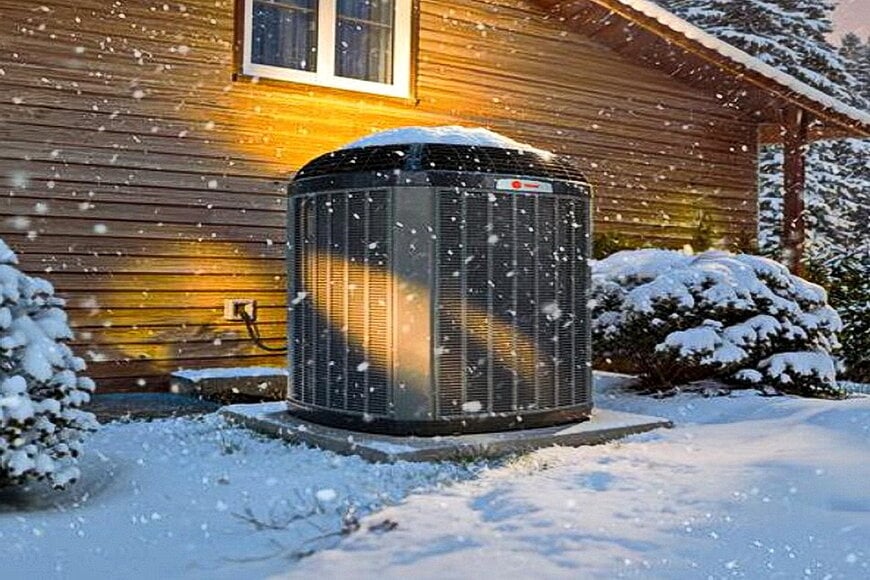
Decarbonizing residential heating in cold climates requires mechanical systems capable of maintaining thermal output without auxiliary resistive heating as ambient air temperatures fall below freezing. Trane Technologies has engineered cold climate heat pumps for residential HVAC applications, releasing the Trane 20 TruComfort Cold Climate Heat Pump with WeatherGuard and the American Standard AccuComfort Platinum 20 Cold Climate Heat Pump with All Weather.
Thermodynamic Capacity Retention in Sub-Zero Environments
Conventional air-source heat pumps suffer steep thermodynamic capacity degradation as the outdoor air temperature drops, often requiring supplemental electric resistance heaters or fossil-fuel boilers to meet space heating loads. These cold climate heat pump systems address this limitation by maintaining 100% rated heating capacity down to 5°F (-15°C) and sustaining continuous heating operation down to -20°F (-28.9°C). For higher outdoor temperatures, the equipment maintains heating operation up to 66°F, while providing space cooling across an ambient dry-bulb range of 55°F to 115°F.
The units meet and exceed the benchmark parameters established by the U.S. Department of Energy (DOE) Residential Cold Climate Heat Pump Technology Challenge, an initiative targeted at eliminating cold-climate capacity loss and raising low-temperature coefficient of performance (COP). Validation of the mechanical design involved 18,000 hours of field testing across cold-region residential structures in Minnesota, Montana, New York, Pennsylvania, Wisconsin, and Texas, verifying heating stability in conditions dropping to -21°F.
Modulation Architecture and Airflow Control Strategies
System operation relies on an inverter-driven variable-speed compressor platform. Rather than cycling through stepped stages, the compressor continuously modulates in 0.1% increments to match building heat gain and loss profiles. This precision prevents cycling losses, minimizes mechanical stress, and delivers supply air temperatures up to 110°F through specialized airflow algorithms.
For existing building stock with central fossil-fuel infrastructure, both models support dual-fuel configurations, pairing the heat pump with a conventional furnace to manage energy transitions without complete ductwork or electrical redesigns.
Diagnostic Connectivity and System Integration
Both product lines integrate proprietary Link communicating technology, establishing digital networking across outdoor units, indoor air handlers, smart thermostats, and zoning dampers. The bus architecture enables digital modulation synchronization and grants HVAC technicians remote diagnostic visibility to monitor operating telemetry, pressure differentials, and fault codes.
Commercial release of the Trane 20 TruComfort and American Standard AccuComfort Platinum 20 is scheduled for the fall season, supported by a 12-year compressor warranty and a 10-year parts and coil warranty upon registration.
Additional Context
This section details technical specifications and competitive benchmarking not included in the original product announcement.
The DOE Residential Cold Climate Heat Pump Challenge specifies that equipment must maintain a coefficient of performance of at least 2.4 at 5°F while operating at 100% of rated capacity, without using auxiliary electric resistance elements. This regulatory framework aligns with standards defined under AHRI 210/240 and regional standards such as the Northeast Energy Efficiency Partnerships (NEEP) Cold Climate Air Source Heat Pump Specification. By sustaining full heating capacity at 5°F and providing functional thermal transfer at -20°F, these platforms compare directly with vapor-injection inverter units developed by manufacturers such as Mitsubishi Electric (Hyper-Heating INVERTER / H2i) and Daikin (Aurora series). These industry platforms collectively replace single-stage vapor-compression cycles with multi-stage refrigerant injection or enhanced vapor injection (EVI) architectures to maintain mass flow through the evaporator under high compression ratios.
Edited by Evgeny Churilov, Induportals Media - Adapted by AI.
www.tranetechnologies.com
