
smartbuildingmag.com
02
'26
Written on Modified on
Digital Workflows and Modular Solutions for Faster Heat Pump Installation
Fraunhofer researchers introduced digital planning architectures and pre-assembled hardware systems in the WESPE project to cut residential heat pump installation times by 40%.
www.fraunhofer.de
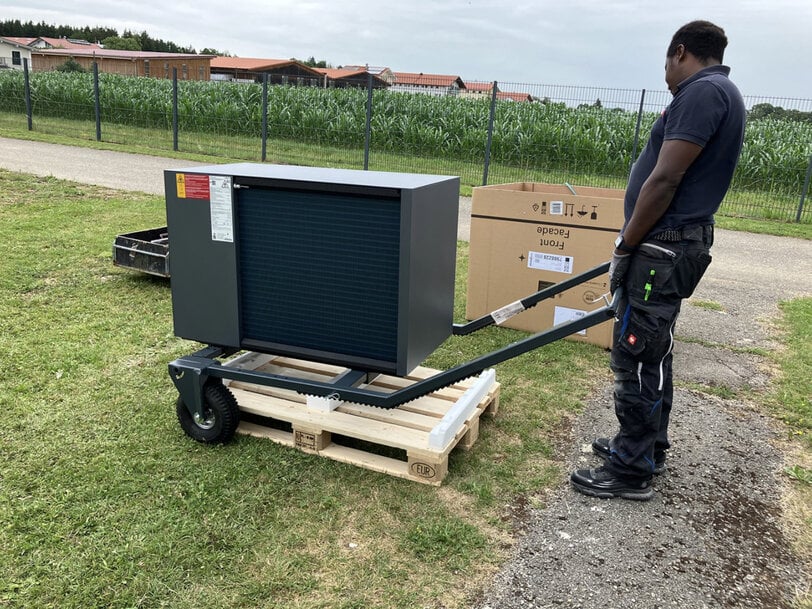
© Fraunhofer IBP: At the Fraunhofer IBP twin houses, researchers are collaborating with installation contractors to test new solutions for heat pump installation under realistic conditions.
Decarbonizing residential heating across existing single-family and two-unit buildings requires transitioning away from fossil fuel boilers, yet complex retrofit procedures and persistent shortages of skilled labor limit deployment velocity. Fraunhofer researchers at the Fraunhofer Institute for Building Physics (IBP) and the Fraunhofer Institute for Solar Energy Systems (ISE), in collaboration with the German Sanitation, Heating and Air Conditioning Association (ZVSHK), industry manufacturers, and trade contractors, addressed this installation bottleneck within the WESPE project by developing an end-to-end modernization framework combining digital planning tools, augmented reality routing, and prefabricated mechanical hardware to reduce installation times by up to 40%.
Digital Process Standardization and Augmented Reality Planning
Converting legacy residential heating plants to hydronic heat pump circuits traditionally involves disconnected planning steps, including manual structural surveys, separate building heat-load estimations, and decentralized coordination across specialized trades. This fragmentation increases engineering overhead, extends site preparation, and introduces alignment errors between back-office design and physical piping runs.
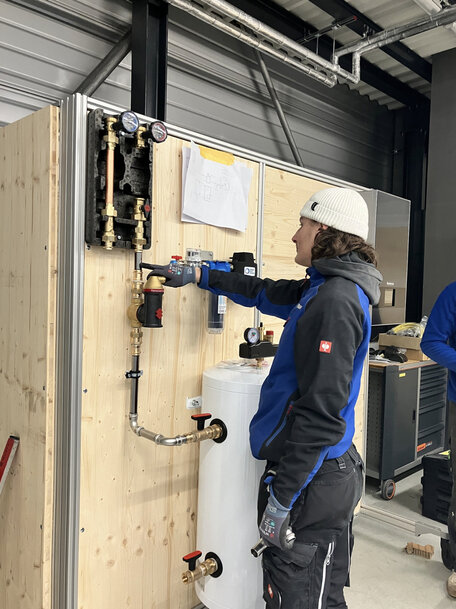
© Fraunhofer IBP: At the Fraunhofer IBP Lab, researchers are working with installation contractors to analyze individual work steps, components and installation procedures for heat pump installation.
The WESPE research consortium developed a web-based optimization platform to standardize project delivery across every project phase, spanning customer intake, building condition assessments, quote generation, logistics, physical installation, commissioning, and billing. Through an integrated questionnaire mechanism, the WESPE Check, heating contractors evaluate existing administrative and field procedures to receive customized optimization pathways, recommended software integrations, and targeted logistics adjustments.
To eliminate multi-platform data transcription, Fraunhofer ISE developed the Heat Pump PlanAR prototype application. The software integrates augmented reality (AR) computer vision with automated piping algorithms to map mechanical rooms on site. The mobile interface generates automated, cost-optimized pipe routing between indoor units, buffer storage vessels, and outdoor heat exchangers, converting spatial room scans into unified equipment layouts and cost quotations within seconds. Field telemetry gathered from 15 participating installation contractors across 30 active residential construction sites utilized dedicated time-tracking software to validate task durations and identify workflow inefficiencies.
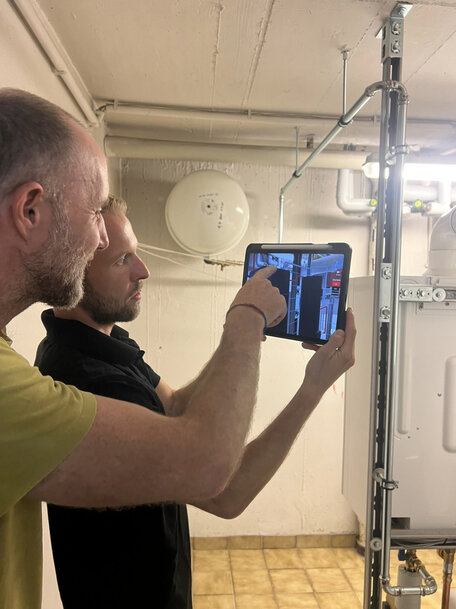
© Fraunhofer ISE: Making work easier in the boiler room with augmented reality: the “Heat Pump PlanAR” app
Prefabricated Hardware Validation in Twin-Building Test Environments
Beyond digital optimization, the physical labor involved in cast-in-place concrete foundations, manual wall penetrations, and custom hydraulic manifold assembly accounts for substantial field time. To accelerate physical mounting, Fraunhofer IBP established a dedicated innovation testing facility at its Holzkirchen campus, utilizing full-scale identical twin single-family research homes alongside the IBP LAB and a configurable utility container to evaluate installation techniques under controlled boundary conditions.
Technicians and researchers evaluated modular, factory-prefabricated building hardware, including pre-cast outdoor unit foundations, integrated structural core wall penetrations, standardized hydraulic distribution modules, and pre-insulated piping runs. The empirical testing confirmed that integrating off-site pre-assembled assemblies with standardized mechanical interfaces eliminates bespoke field fabrication, minimizes structural modification errors, and significantly accelerates fluid and electrical connections during continuous boiler replacements.
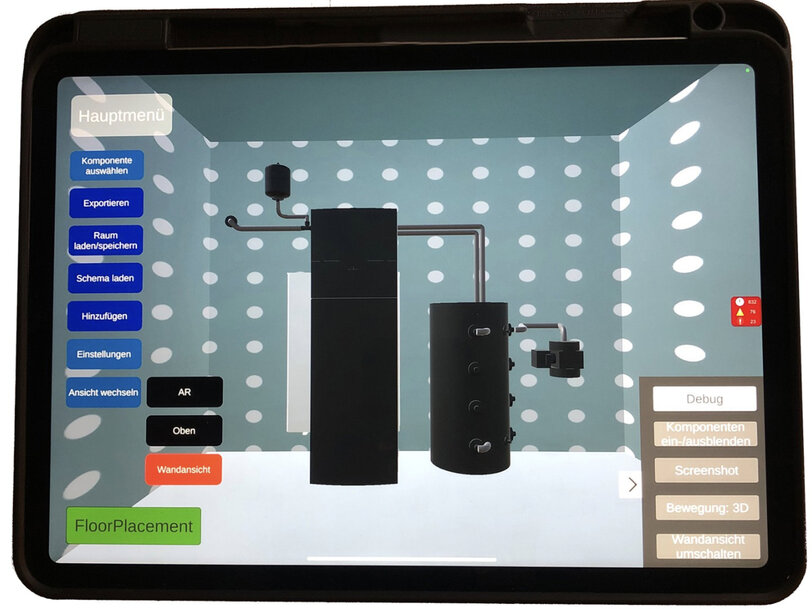
© Fraunhofer ISE: Digitale Abbildung eines Hydraulikschemas im virtuellen Raum
Susanne Schwab, a researcher at Fraunhofer IBP, noted that centralized platform guidance enables contractors to manage complex heating system requirements while mitigating execution risks across field and administrative teams.
Annette Uhl, a researcher at Fraunhofer ISE, indicated that unifying diverse stakeholders across research, manufacturing, and trade trades establishes the practical software and hardware foundations required to accelerate sustainable heating adoption.
Additional Context:
This section details technical specifications and competitive benchmarking not included in the original product announcement.
Residential hydronic heat pump retrofits across European housing stocks must comply with DIN EN 12831 heating load calculation standards and hydraulic balancing requirements under DIN EN 14336. Traditional boiler replacements requiring bespoke copper or multilayer composite piping, separate expansion vessel integration, and site-cast concrete slabs for monobloc units demand an average of 40 to 60 labor hours per domestic installation. By utilizing prefabricated modular hydronic stations—such as integrated indoor hydro-boxes containing circulation pumps, three-way diverter valves, back-up electric heaters, and expansion vessels—field installation labor drops to under 25 to 35 hours per site.
In the European building modernization sector, modular prefabrication and digital surveying workflows represent a competitive focus for major HVAC manufacturers, including Viessmann (with its Vitocal modular split and monobloc architectures), Vaillant (aroTHERM systems supported by planSOFT digital planning tools), and Daikin (Altherma pre-plumbed indoor storage configurations). While original equipment manufacturers often provide proprietary sizing tools locked to their specific product lines, independent digital frameworks like Fraunhofer's Heat Pump PlanAR app establish multi-vendor interoperability. Standardizing building penetrations according to DIN 18533 waterproofing standards and employing factory-insulated pre-sealed conduits eliminates the moisture ingress and structural thermal bridging common to manual hammer-drilled retrofits.
Edited by Natania Lyngdoh, Induportals editor, with AI assistance.
www.fraunhofer.com
Decarbonizing residential heating across existing single-family and two-unit buildings requires transitioning away from fossil fuel boilers, yet complex retrofit procedures and persistent shortages of skilled labor limit deployment velocity. Fraunhofer researchers at the Fraunhofer Institute for Building Physics (IBP) and the Fraunhofer Institute for Solar Energy Systems (ISE), in collaboration with the German Sanitation, Heating and Air Conditioning Association (ZVSHK), industry manufacturers, and trade contractors, addressed this installation bottleneck within the WESPE project by developing an end-to-end modernization framework combining digital planning tools, augmented reality routing, and prefabricated mechanical hardware to reduce installation times by up to 40%.
Digital Process Standardization and Augmented Reality Planning
Converting legacy residential heating plants to hydronic heat pump circuits traditionally involves disconnected planning steps, including manual structural surveys, separate building heat-load estimations, and decentralized coordination across specialized trades. This fragmentation increases engineering overhead, extends site preparation, and introduces alignment errors between back-office design and physical piping runs.
© Fraunhofer IBP: At the Fraunhofer IBP Lab, researchers are working with installation contractors to analyze individual work steps, components and installation procedures for heat pump installation.
The WESPE research consortium developed a web-based optimization platform to standardize project delivery across every project phase, spanning customer intake, building condition assessments, quote generation, logistics, physical installation, commissioning, and billing. Through an integrated questionnaire mechanism, the WESPE Check, heating contractors evaluate existing administrative and field procedures to receive customized optimization pathways, recommended software integrations, and targeted logistics adjustments.
To eliminate multi-platform data transcription, Fraunhofer ISE developed the Heat Pump PlanAR prototype application. The software integrates augmented reality (AR) computer vision with automated piping algorithms to map mechanical rooms on site. The mobile interface generates automated, cost-optimized pipe routing between indoor units, buffer storage vessels, and outdoor heat exchangers, converting spatial room scans into unified equipment layouts and cost quotations within seconds. Field telemetry gathered from 15 participating installation contractors across 30 active residential construction sites utilized dedicated time-tracking software to validate task durations and identify workflow inefficiencies.
© Fraunhofer ISE: Making work easier in the boiler room with augmented reality: the “Heat Pump PlanAR” app
Prefabricated Hardware Validation in Twin-Building Test Environments
Beyond digital optimization, the physical labor involved in cast-in-place concrete foundations, manual wall penetrations, and custom hydraulic manifold assembly accounts for substantial field time. To accelerate physical mounting, Fraunhofer IBP established a dedicated innovation testing facility at its Holzkirchen campus, utilizing full-scale identical twin single-family research homes alongside the IBP LAB and a configurable utility container to evaluate installation techniques under controlled boundary conditions.
Technicians and researchers evaluated modular, factory-prefabricated building hardware, including pre-cast outdoor unit foundations, integrated structural core wall penetrations, standardized hydraulic distribution modules, and pre-insulated piping runs. The empirical testing confirmed that integrating off-site pre-assembled assemblies with standardized mechanical interfaces eliminates bespoke field fabrication, minimizes structural modification errors, and significantly accelerates fluid and electrical connections during continuous boiler replacements.
© Fraunhofer ISE: Digitale Abbildung eines Hydraulikschemas im virtuellen Raum
Susanne Schwab, a researcher at Fraunhofer IBP, noted that centralized platform guidance enables contractors to manage complex heating system requirements while mitigating execution risks across field and administrative teams.
Annette Uhl, a researcher at Fraunhofer ISE, indicated that unifying diverse stakeholders across research, manufacturing, and trade trades establishes the practical software and hardware foundations required to accelerate sustainable heating adoption.
Additional Context:
This section details technical specifications and competitive benchmarking not included in the original product announcement.
Residential hydronic heat pump retrofits across European housing stocks must comply with DIN EN 12831 heating load calculation standards and hydraulic balancing requirements under DIN EN 14336. Traditional boiler replacements requiring bespoke copper or multilayer composite piping, separate expansion vessel integration, and site-cast concrete slabs for monobloc units demand an average of 40 to 60 labor hours per domestic installation. By utilizing prefabricated modular hydronic stations—such as integrated indoor hydro-boxes containing circulation pumps, three-way diverter valves, back-up electric heaters, and expansion vessels—field installation labor drops to under 25 to 35 hours per site.
In the European building modernization sector, modular prefabrication and digital surveying workflows represent a competitive focus for major HVAC manufacturers, including Viessmann (with its Vitocal modular split and monobloc architectures), Vaillant (aroTHERM systems supported by planSOFT digital planning tools), and Daikin (Altherma pre-plumbed indoor storage configurations). While original equipment manufacturers often provide proprietary sizing tools locked to their specific product lines, independent digital frameworks like Fraunhofer's Heat Pump PlanAR app establish multi-vendor interoperability. Standardizing building penetrations according to DIN 18533 waterproofing standards and employing factory-insulated pre-sealed conduits eliminates the moisture ingress and structural thermal bridging common to manual hammer-drilled retrofits.
Edited by Natania Lyngdoh, Induportals editor, with AI assistance.
www.fraunhofer.com
