
smartbuildingmag.com
15
'26
Written on Modified on
R290 Heat Pump Buderus Logatherm WLW166i
Bosch Home Comfort Group introduces the Buderus Logatherm WLW166i MBB AR heat pump for high-temperature heating in apartments.
www.bosch.com
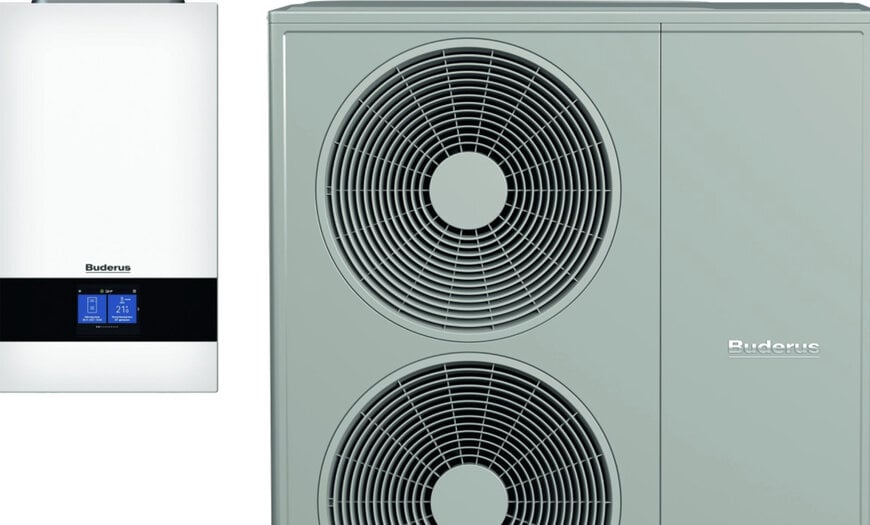
Buderus, a brand of Bosch Home Comfort Group, expands its residential building portfolio with the introduction of the Logatherm WLW166i MBB AR. This air-to-water heat pump is designed to operate with natural refrigerant and is specifically targeted at newly built apartments or those undergoing thermal retrofitting.
Engineering Challenges in Residential Thermal Retrofitting
The energy transition in existing buildings requires heat generators capable of providing high flow temperatures to supply traditional radiators while maintaining optimal energy efficiency. In apartments, limited installation spaces both indoors and outdoors, such as balconies or under-window areas, represent a critical architectural constraint. Furthermore, the adoption of low environmental impact natural refrigerants such as propane (R290) imposes strict safety requirements for managing potential gas leaks within living spaces.
Thermodynamic Architecture and Refrigerant Management
The Logatherm WLW166i MBB AR heat pump achieves an A+++ energy class, providing hydraulic flow temperatures up to 75 °C. This thermal capacity is supported by the use of R290 refrigerant, characterized by a global warming potential (GWP) of 0.02. To meet different thermal load requirements, the outdoor unit is available in five power sizes: 4, 6, and 7 kW with single-phase power supply, and 10 or 13 kW with single-phase and three-phase options. Depending on the capacity, the outdoor module has a height of 80 or 130 cm, allowing for flexible outdoor installation. To protect the hydraulic circuit from freezing in the event of a power outage at sub-zero temperatures, the outdoor machine is equipped with an exogel valve as standard.
Modular Configuration and Patented Safety Sensors
The indoor architecture features two installation options: a compact wall-mounted version weighing 20 kg and a floor-standing version, 162 cm high, equipped with an integrated 180-liter domestic hot water (DHW) cylinder. The wall-mounted variant includes a back panel designed for the insertion of the expansion vessel and an integrated three-way valve, as well as connection pipes extended by 30 cm to simplify the hydraulic connection. To ensure the highest operational safety standards with propane, Buderus has patented a system that integrates two R290 sensors in the protective hood located above the degasser. These sensors are connected to a flow shut-off valve, allowing the early detection of any refrigerant leaks into the technical water and isolating the system to allow maximum installation freedom in indoor spaces.
Diagnostic Connectivity and Control Interface
At the automation level, the system is governed by the BC 400 color display located on the indoor unit. Remote connectivity is managed via the MX400 Wi-Fi gateway integrated as standard, which communicates with the MyBuderus smartphone application. This network architecture allows local Buderus Service Centers to perform remote diagnostics and provide real-time technical support, optimizing preventive maintenance activities. The Logatherm WLW166i MBB AR platform will be presented to the Italian market in the fall of 2026.
Additional Context
This section details technical specifications and competitive benchmarking not included in the original product announcement
In the European market of high-temperature air-to-water heat pumps with R290 refrigerant, the Buderus Logatherm WLW166i MBB AR series competes with thermodynamic architectures such as the Vaillant aroTHERM plus and the Panasonic Aquarea T-CAP. While these competing platforms similarly reach flow temperatures of 75 °C to facilitate retrofit projects on traditional radiators, the engineering advantage of the Buderus solution lies in its patented safety system with sensors integrated into the degasser and shut-off valve. This hydraulic isolation mechanism responds directly to regulatory limits on the installation of propane equipment in confined spaces, allowing designers greater freedom in positioning the indoor unit without requiring complex auxiliary ventilation systems in technical rooms.
Edited by Maria Brueva, Induportals editor – adapted by AI.
www.bosch.com
