
smartbuildingmag.com
04
'26
Written on Modified on
Creating Energy-Intelligent Urban Infrastructure with AI and IoT
How connected systems enable energy analytics, comfort optimization, and ESG-driven retrofits across modern buildings and cities.
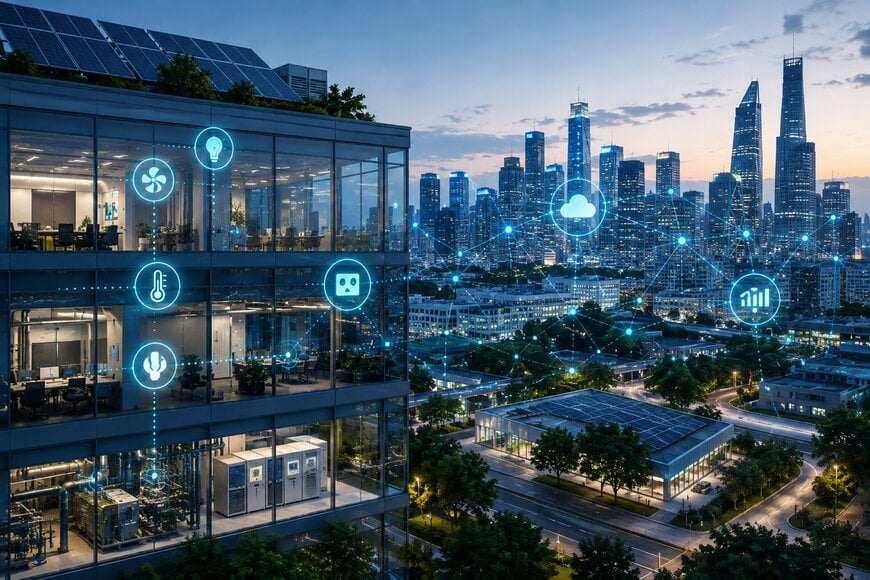
As cities continue to grow and energy costs climb, buildings are expected to do far more than provide shelter or office space. They are becoming intelligent, connected environments capable of monitoring their own performance, adapting to changing conditions, and supporting broader sustainability goals. At the heart of this transformation are artificial intelligence (AI) and the Internet of Things (IoT), two technologies that are changing how buildings consume energy, interact with occupants, and integrate with the wider urban ecosystem.
The move toward smart buildings is no longer limited to new developments. Owners of existing offices, factories, hospitals, hotels, shopping centers, and residential properties are increasingly investing in digital retrofits that improve operational efficiency while extending the life of their assets. With stricter environmental regulations and growing Environmental, Social and Governance (ESG) commitments, intelligent building technologies are rapidly shifting from a competitive advantage to a business necessity.
Market research firm Precedence Research projects the global smart building market was valued at approximately US$111.5 billion in 2025 and is projected to reach US$302.3 billion by 2035, expanding at a compound annual growth rate (CAGR) of 10.49%. The firm attributes this growth to the increasing adoption of IoT, artificial intelligence, cloud computing, and building automation systems that improve energy efficiency, security, and operational performance. North America currently leads the market, while Asia-Pacific is expected to record the fastest growth as governments and private developers continue investing in smart city initiatives and sustainable infrastructure.
Moving Beyond Building Automation
Traditional building management systems were primarily designed to automate individual functions such as heating, ventilation and air conditioning (HVAC), lighting, and security. Today's smart buildings, however, operate as integrated digital ecosystems.
Thousands of connected sensors collect real-time data on occupancy, temperature, humidity, lighting, indoor air quality, equipment performance, and energy consumption. AI analyses this information continuously, enabling buildings to respond automatically to changing conditions instead of relying on fixed operating schedules.
For example, rather than cooling an entire office throughout the day, AI can identify occupied areas and adjust HVAC settings accordingly. Lighting systems respond to occupancy and natural daylight, reducing unnecessary electricity use while maintaining a comfortable working environment. Predictive analytics can also detect early signs of equipment wear, allowing maintenance teams to resolve issues before they become costly breakdowns.
Beyond operational efficiency, AI is improving the occupant experience. Intelligent systems learn user preferences for lighting and temperature, creating more personalized workspaces. AI also enhances security by supporting facial recognition, anomaly detection, and intelligent video analytics that help identify potential threats more quickly.
Smarter Buildings, Lower Energy Consumption
Improving building efficiency has become a global priority because buildings remain among the world's largest energy consumers.
According to the International Energy Agency (IEA), buildings account for roughly 30% of global energy demand, while industry estimates cited by Precedence Research indicate that approximately 30% of the energy used in buildings is wasted due to inefficient operations. In the United States alone, buildings consume nearly 70% of the country's electricity, with almost half of that energy ultimately going to waste.
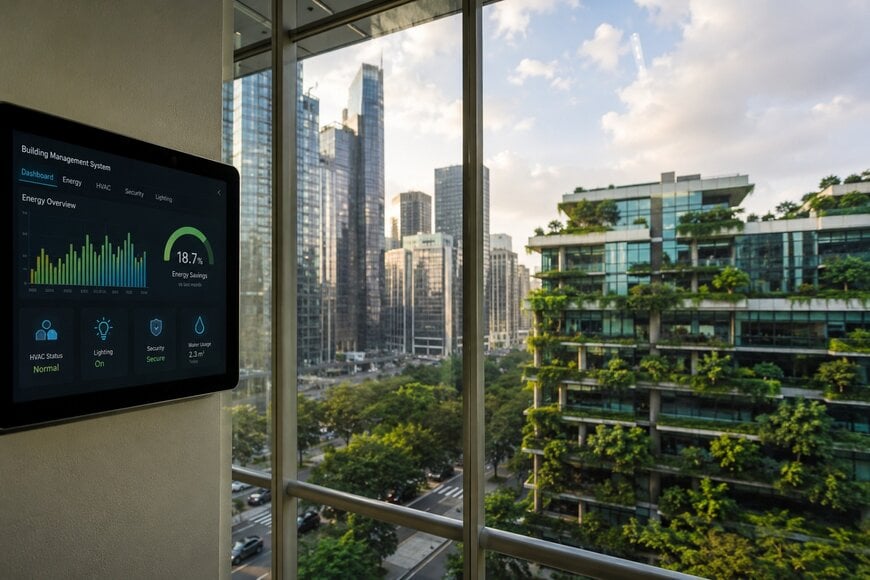
Smart buildings address these inefficiencies through intelligent energy management. Instead of relying on preset schedules, connected sensors and Building Energy Management Systems (BEMS) continuously monitor occupancy, weather conditions, equipment performance, and electricity usage to optimize operations in real time.
The results are significant. Many organizations implementing AI-driven building management systems have reported energy savings of 30% to 40%, while simultaneously lowering operating costs and improving occupant comfort.
Turning Data into Actionable Insights
One of AI's greatest strengths lies in its ability to transform large volumes of operational data into meaningful business insights.
Modern buildings generate continuous streams of information from HVAC systems, elevators, lighting controls, water management systems, access control, and renewable energy installations. Rather than overwhelming facility managers with raw data, AI identifies patterns, highlights anomalies, and recommends corrective actions.
For example, if electricity consumption suddenly increases outside normal operating hours, AI can determine whether the cause is faulty equipment, unexpected occupancy, or incorrect system settings. Maintenance teams receive alerts before energy waste becomes a major expense.
Predictive maintenance offers another important advantage. Instead of servicing equipment according to fixed schedules, AI monitors asset health and predicts when maintenance is actually required. This reduces downtime, extends equipment life, and lowers maintenance costs while improving operational reliability.
ESG Commitments Driving Building Retrofits
Sustainability goals are becoming one of the strongest drivers behind smart building investments.
Rather than replacing ageing buildings, many organizations are choosing to retrofit existing facilities with IoT sensors, cloud-based monitoring platforms, intelligent controls, and AI-powered analytics. These upgrades significantly improve building performance without requiring extensive structural changes.
The business benefits extend beyond lower energy bills. Intelligent buildings provide real-time data that helps organizations measure carbon emissions, monitor water usage, improve indoor environmental quality, and demonstrate progress toward ESG targets.
Governments are also encouraging this transition. According to Morgan Stanley Research, achieving global net-zero targets will require trillions of dollars in investments in building energy efficiency by 2050. Meanwhile, the European Union's "Fit for 55" initiative is accelerating investment in upgrading ageing building stock to reduce greenhouse gas emissions.
The Role of Smart Buildings in Smart Cities
Buildings no longer operate in isolation. Increasingly, they are becoming connected components of larger smart city ecosystems.
Modern smart buildings exchange data with electrical grids, transportation systems, water infrastructure, and renewable energy networks. During periods of peak electricity demand, buildings can automatically reduce energy consumption or store renewable energy for later use. Smart parking systems provide real-time availability information that helps reduce congestion, while intelligent water management systems detect leaks and optimize consumption.
Asia-Pacific is emerging as one of the fastest-growing markets for these technologies. Rapid urbanization, government-backed smart city programs, and rising investments in digital infrastructure are accelerating adoption across China, India, Singapore, Japan, and South Korea.
Cybersecurity and Integration Remain Key Challenges
Despite the clear benefits, smart buildings also introduce new operational challenges.
Cybersecurity has become a major concern as more building systems connect through IoT devices. Many sensors and connected devices still rely on outdated software or inconsistent security protocols, increasing the risk of cyberattacks. Building owners must therefore invest not only in digital technologies but also in robust cybersecurity strategies.
Integration presents another hurdle. Many facilities contain equipment from multiple manufacturers that use different communication standards, making system interoperability difficult. At the same time, the industry continues to face a shortage of professionals with the expertise to design, implement, and maintain increasingly sophisticated digital building systems.
Looking Ahead
Commercial buildings remain the largest adopters of smart building technologies, particularly offices, healthcare facilities, hotels, industrial sites, and retail developments seeking to improve operational efficiency while reducing energy costs. Wireless technologies such as Wi-Fi 6 and 5G are further accelerating adoption by enabling faster, more reliable connectivity for the growing number of IoT devices deployed throughout modern buildings.
Looking ahead, AI will evolve from simply optimizing individual building systems to orchestrating entire building ecosystems. Future smart buildings will coordinate renewable energy generation, battery storage, electric vehicle charging, occupancy management, and predictive maintenance through unified digital platforms.
Ultimately, smart buildings will become active participants in future energy networks rather than passive consumers of electricity. By combining AI, IoT, cloud computing, and advanced analytics, they will help cities reduce emissions, improve operational resilience, and create healthier, more sustainable environments for businesses and communities alike.
Article contributed by Kathryn Gerardino-Elagio, Editor-in-Chief, Ringier Trade Media, South East Asia.
