
smartbuildingmag.com
01
'26
Written on Modified on
Scalable Architecture for Mission Critical Building Automation Systems
Johnson Controls engineered its latest software platform to enhance operational resilience and cybersecurity across complex industrial facilities.
www.johnsoncontrols.com
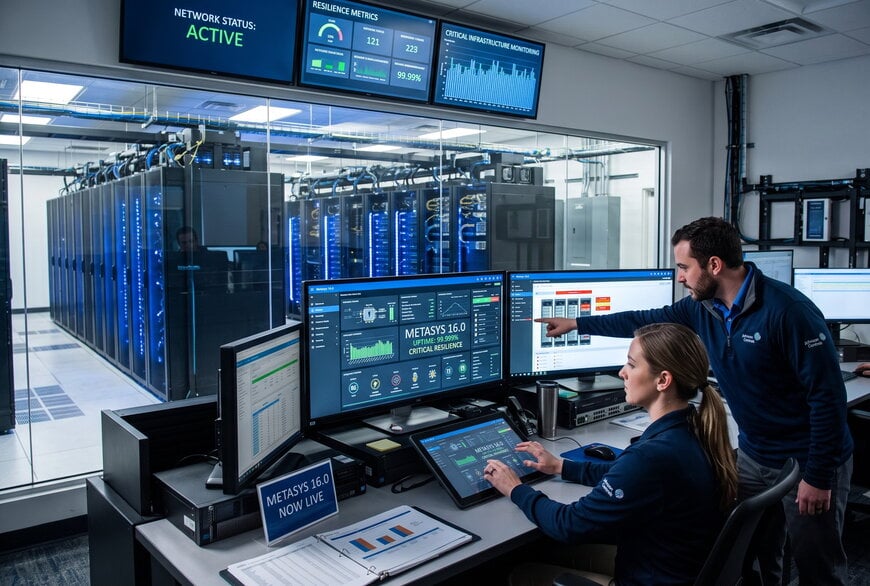
A recent development in building automation systems introduces automated engineering workflows and decentralized server redundancy to minimize downtime in precision environments. This platform targets high-growth sectors where environmental parameters directly affect operational continuity, including advanced manufacturing, biotechnology facilities, and data centers.
Enhanced Cybersecurity and Automated Deployment Mechanisms
Operating environments within modern industrial facilities demand strict adherence to international security frameworks. The platform integrates communication controls designed to align with IEC 62443-4-2 Security Level 2 compliance criteria, mitigating unauthorized access risks across networked components. To streamline system maintenance, automated upgrade protocols execute preemptive validation checks, which reduce the time required to deploy security patches and operational updates by up to 40%.
Integration processes utilize open-source visual wiring tools, specifically Node-RED, to facilitate real-time data exchange across disparate hardware ecosystems. This approach reduces integration deployment timelines by up to 80% and lowers engineering installation costs by an estimated 60% to 70% compared to traditional manual scripting methods. Standardized engineering workflows further decrease initial configuration and commissioning times by up to 30%.
Operational Resilience and Portfolio Scalability
Continuous uptime in mission-critical facilities requires robust hardware independent failure recovery. The system incorporates built-in multi-server replication mechanisms that allow secondary servers to assume control without operational disruption if a primary server fails. This native redundancy eliminates the requirement for specialized third-party high-availability hardware or external software cluster management.
Network scalability handles expanding industrial campus layouts by supporting up to 1,300 Internet Protocol devices per network engine, representing a 30% capacity increase over previous generations. For environmental efficiency, the control logic incorporates standardized air and water loops sequenced in strict accordance with ASHRAE Guideline 36 specifications. Implementing these optimized sequences reduces HVAC energy consumption by up to 30% while maintaining tight control tolerances over indoor air quality and thermal parameters.
Unified analytical interfaces compile peak load variables, emissions metrics, and energy consumption data into a single centralized dashboard. This centralized reporting structure streamlines compliance verification for international regulatory frameworks, including the Energy Performance of Buildings Directive, by utilizing validated system data to generate standardized performance insights.
Additional Context: Technical Specifications and Competitive Benchmarking
Building automation platforms competing in the enterprise space, such as Siemens Desigo CC and Schneider Electric EcoStruxure Building Operation, utilize differing methodologies to achieve high availability and cybersecurity compliance.
While many enterprise platforms require external IT-grade failover clustering software or specialized redundant virtualization layers to guarantee continuous uptime, the native multi-server resilience model embedded in Metasys 16.0 removes third-party dependencies from the operational technology infrastructure.
Regarding cybersecurity, achieving alignment with IEC 62443-4-2 Security Level 2 at the software layer places the system on par with modern industrial control systems, moving beyond basic IT firewall protection to secure device-level communications natively within the building automation framework. Furthermore, while competitive platforms rely on proprietary application programming interfaces for third-party hardware integration, the standardization on Node-RED provides an open, flow-based development environment that accelerates data ingestion from diverse Internet of Things sensors and industrial sub-systems.
Edited by Evgeny Churilov, Induportals Media - Adapted by AI.
www.johnsoncontrols.com
