
smartbuildingmag.com
24
'26
Written on Modified on
Honeywell Launches Next-Generation Smoke Control for NOTIFIER INSPIRE Platform
Honeywell has introduced integrated smoke control capabilities and cloud-connected safety tools within its NOTIFIER INSPIRE platform to unify life safety infrastructure.
www.honeywell.com
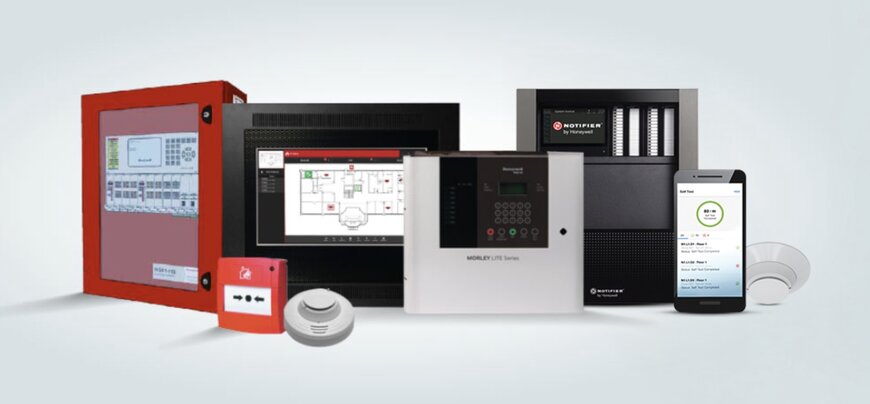
Honeywell has announced an expansion of its fire and life safety portfolio, introducing next-generation smoke control functionalities within its NOTIFIER INSPIRE platform. The launch includes a suite of cloud-connected digital tools engineered to simplify field installation, accelerate system commissioning, and automate ongoing compliance workflows.
Integrated Smoke Control and Controlled Ventilation
Modern commercial buildings depend on automated containment systems to secure egress paths during emergencies. Developed in collaboration with its customer advisory board, the updated NOTIFIER INSPIRE architecture integrates fully embedded smoke control features directly into the core life safety platform. This approach moves beyond fragmented system configurations, eliminating the requirement for auxiliary hardware modules and complex custom software programming.
The unified architecture streamlines coordination across disparate life safety functions to lower total system costs and accelerate field deployment. This structural configuration makes building retrofits more practical by leveraging existing wiring infrastructure, while improving ongoing compliance through automated system testing and centralized data reporting.
Beyond fire-mode smoke isolation, the system incorporates a natively integrated purge function designed to mitigate carbon monoxide (CO) events. Upon receiving a localized CO alarm signal, the system alters building airflow parameters, exhausting contaminated air from the impacted structural zone while simultaneously introducing outdoor fresh air. This controlled ventilation sequence lowers gaseous CO concentration levels to reduce occupant exposure, contrasting with fire-mode configurations where airflow is restricted to isolate smoke plumes and limit oxygen delivery to the fire zone.
Connected Platforms and Redundant Communication
To optimize operational oversight across the equipment lifecycle, the company has introduced several software and hardware innovations within its Connected Life Safety Services (CLSS) ecosystem:
- Zone Sync: A digital alignment tool developed to synchronize floor plans, peripheral device mapping, and active alarm zones across multiple enterprise systems, ensuring consistent spatial data for building operators and first responders.
- CLSS Rescue Assist: An incident management application engineered to provide building teams and first responders with real-time location visibility of occupants requiring supplementary assistance during emergency evacuations.
- Phoenix G2 Cellular Alerting: An integration of USDD’s Phoenix G2 ATX platform that adds redundant cellular communication paths to the primary dispatch interface, securing transmission continuity for critical notifications during landline network disruptions.
Additional Context
This section details technical specifications not included in the original news release.
Automated smoke control configurations inside modern commercial facilities operate under strict differential pressure regimes mandated by international fire codes such as NFPA 92. When a fire is detected, the life safety platform commands the building’s heating, ventilation, and air conditioning (HVAC) systems to implement a "sandwich" pressure method. The system exhausts air from the localized fire zone to establish a negative pressure pocket, while simultaneously supplying high-volume fresh air to the floors immediately above and below the incident area to create positive pressure zones. This pressure gradient physically prevents toxic smoke, soot, and hot gases from migrating vertically through elevator shafts, stairwells, and utility raceways, maintaining clear visibility along emergency egress corridors.
The digital validation of these safety sequences depends on automated testing networks connected via the cloud. Traditional testing requires field technicians to manually actuate dampers, verify fan motor contactor states, and measure pressure deltas using handheld manometers at individual zone barriers. Unified networks automate this process by monitoring integrated pressure transducers and duct-mounted airflow switches over an industrial fieldbus network.
The system executes periodic, low-latency testing cycles during off-peak hours, cycling motorized fire-smoke dampers and verifying full stroke movement via limit switches. This diagnostic data is aggregated at the edge and pushed via secure protocols to cloud-hosted databases, automatically generating compliant inspection records and time-stamped validation logs required by local authorities having jurisdiction (AHJs).
Edited by Romila DSilva, Induportals Editor, with AI assistance.
