
smartbuildingmag.com
18
'26
Written on Modified on
Enclosure Heating for Reliable Cold-Weather Operation
Indeeco introduces compact thermal protection to help safeguard sensitive control systems from moisture and freezing.
indeeco.com
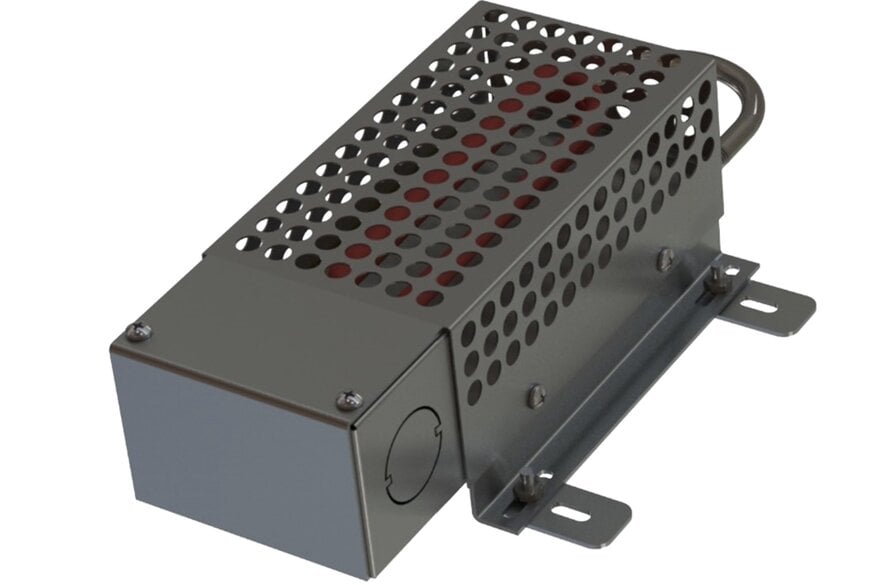
Indeeco is releasing new Instrument Enclosure Heaters engineered to protect critical electrical and mechanical systems from cold-weather performance degradation. This thermal management solution is designed specifically for industrial and commercial application areas where maintaining stable internal temperatures is structurally necessary for continuous hardware operation.
Environmental Control Within the Industrial Data Ecosystem
To support a reliable industrial data ecosystem, sensitive electronic components and mechanical relays require consistent environmental regulation to prevent system failures caused by cold weather and moisture buildup. The deployment of these enclosed heating units addresses the immediate risk of condensation and freezing within outdoor or unconditioned instrumentation enclosures. By maintaining stable internal ambient temperatures, the hardware mitigates the risk of operational downtime and extends the functional lifecycle of deployed equipment in heavy industrial settings. The units are engineered to provide uniform heat distribution while maintaining a highly compact physical footprint, facilitating integration into space-constrained control panels without interfering with existing cable routing or component placement.
Hardware Specifications and Modular Installation
The structural housing of each heating unit is constructed from durable 304 stainless steel, incorporating a corrosion-resistant perforated cover that promotes safe, unhindered airflow and thermal dissipation. Designed for both initial installations and active retrofit applications, the hardware features flexible mounting configurations that support straightforward mechanical integration across a variety of standard NEMA-rated enclosure types. To streamline ongoing maintenance and minimize service disruptions, the units incorporate a field-replaceable heating element. This modular approach is supported by an easily accessible terminal block and dual conduit entry points, which provide technicians with adaptable wiring configurations during the installation process.
Automated Temperature Regulation Mechanisms
Consistent environmental control is achieved through an integral mechanical thermostat that automatically regulates the thermal output of the enclosure. The internal thermostat is factory-preset to activate when internal enclosure temperatures drop below 50 degrees Fahrenheit, ensuring immediate freeze protection for sensitive electronics. This automated activation mechanism minimizes unnecessary electrical energy consumption by restricting heater operation strictly to periods of critical thermal fluctuation. By limiting active heating cycles, the system improves the overall energy efficiency of the enclosure's thermal management infrastructure.
Additional Context
This section details technical specifications and competitive benchmarking not included in the original news release.
Within the industrial thermal management ecosystem, enclosure heaters typically utilize either positive temperature coefficient (PTC) semiconductor elements or traditional resistive heating elements paired with mechanical thermostats. Comparable products from thermal management manufacturers such as Stego or nVent HOFFMAN frequently rely on extruded aluminum housings and PTC technology. While PTC heaters are self-regulating, they often experience variable inrush currents upon startup. In contrast, utilizing a fixed-resistance element with a discrete 50-degree Fahrenheit mechanical thermostat provides deterministic thermal regulation without the variable current spikes associated with PTC cold starts. Furthermore, the implementation of 304 stainless steel construction provides a measurable benchmark for chemical and corrosion resistance, outperforming the standard anodized aluminum housings frequently deployed in light-industrial environments.
Edited by Aishwarya Mambet, Induportals Editor, with AI assistance.
www.indeeco.com
