
smartbuildingmag.com
08
'26
Written on Modified on
Award for Workplace Architecture in Process Automation
GEMÜ Group received the Best Workspaces Award 2026 for its headquarters in Kupferzell, highlighting workplace design strategies focused on collaboration, ergonomics and productivity.
www.gemu-group.com
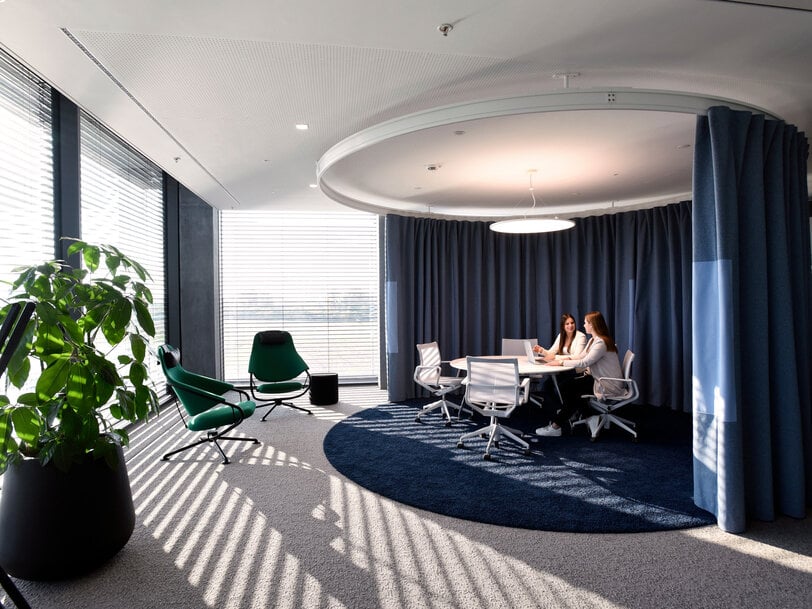
The GEMÜ Group headquarters in Kupferzell, Germany, has received the “Best Workspaces Award 2026”, an international distinction for office architecture and modern working environments. The recognition highlights the company’s approach to integrating workplace functionality, employee well-being and operational efficiency within an industrial and engineering setting.
Evaluation Criteria Focused on Workplace Performance
The Best Workspaces Award is presented annually to projects across the German-speaking region that demonstrate measurable advances in workplace architecture, interior design and functional office planning. Approximately 70 projects were recognised in the 2026 edition of the competition.
The evaluation was conducted by an independent panel of experts from architecture, design, research and media. Assessment criteria included adaptability of workspaces, communication support, collaboration efficiency, concentration capabilities, employee well-being and architectural quality.
The award programme is organised by Callwey Verlag in cooperation with partners specialising in architecture, workplace research and design. The initiative aims to document and promote developments in smart working environments and modern office infrastructure.
Headquarters Designed for Collaboration and Flexibility
GEMÜ developed its headquarters in the Hohenlohe business park in Kupferzell as a workplace environment intended to support changing operational and engineering requirements. The facility combines open collaboration areas, ergonomic workstations and quiet zones designed for focused technical work.
The building reflects wider industrial trends in workplace planning, where companies increasingly align office infrastructure with digital supply chain coordination, engineering communication and hybrid work processes. In sectors such as process automation and sterile manufacturing, workspace design is also becoming associated with recruitment, employee retention and interdisciplinary project management.
According to GEMÜ, the headquarters was planned using a holistic workplace concept that combines architectural functionality with organisational culture and employee interaction. The design aims to create conditions that encourage communication while also supporting concentration-intensive tasks.
“For GEMÜ, a modern working environment is a key factor in our success,” said Gert Müller, CEO and Managing Partner of the GEMÜ Group. He stated that the headquarters was designed to support innovation, collaboration and job satisfaction through flexible workspaces, ergonomic equipment and dedicated quiet areas.
Relevance for Industrial and Technical Sectors
Modern workplace architecture is increasingly being adopted in industrial sectors where engineering collaboration, technical problem-solving and cross-functional communication are central to operations. Companies involved in process automation, biotechnology, semiconductor manufacturing and industrial production are investing in work environments that support both operational efficiency and employee productivity.
GEMÜ develops valves, measurement systems and control technology for liquids, vapours and gases. The company’s products are used in industries including pharmaceuticals, biotechnology, food processing, semiconductor manufacturing and industrial processing applications.
The recognition of the Kupferzell headquarters illustrates how industrial companies are increasingly treating workplace infrastructure as part of a broader industrial workplace ecosystem connected to process automation, technical collaboration and long-term operational performance.
Edited by an industrial journalist Sucithra Mani with AI assistance.
www.gemu-group.com
