
smartbuildingmag.com
06
'26
Written on Modified on
ComAp Launches Controller Emulation Tool for Testing
Software-based simulation platform enables off-site validation of power and microgrid controller configurations.
www.comap-control.com
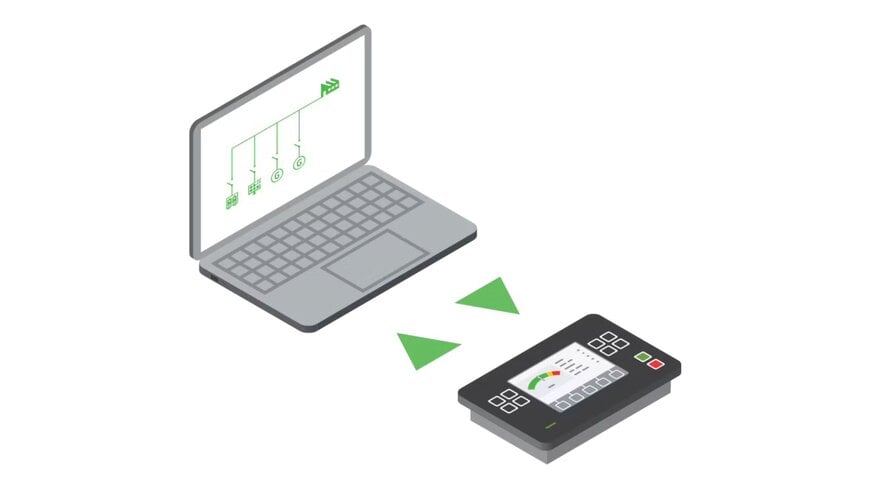
Image Credits: ComAp. The ComAp Emulation Tool.
ComAp has introduced the Emulation Tool, a simulation platform designed to help engineers test, validate, and troubleshoot complex power control systems without requiring physical generator sets, switchboards, or on-site hardware infrastructure. Integrated directly into the company’s InteliConfig software environment, the tool enables simulation-based commissioning and controller validation using a Hardware-in-the-Loop (HIL) architecture.
The platform is initially available for InteliGen 500 G2, InteliMains 510, InteliGen 1000, and InteliMains 1010 controllers. Support for InteliNeo 5500 and InteliNeo 6000 is scheduled within one month, while compatibility for InteliSys 2000 and marine controller systems is planned for the second half of 2026.
Hardware-in-the-Loop simulation for distributed energy systems
The Emulation Tool allows engineers and system integrators to simulate the operational behavior of mains supplies, generator sets, photovoltaic (PV) systems, batteries, and electrical loads using predefined site models developed by ComAp.
Unlike simplified software-only simulations, the system operates using actual controller firmware within a Hardware-in-the-Loop framework. This approach enables high-fidelity emulation that reproduces real operational behavior and controller interactions under simulated field conditions.
HIL simulation has become increasingly important in the digital power infrastructure and energy management sectors because it enables system validation before physical deployment. In applications such as hybrid microgrids and data centers, configuration errors discovered during commissioning can result in costly delays, equipment incompatibility, or operational instability.
By executing controller logic within a simulated environment, the Emulation Tool enables project teams to evaluate operational sequences, fault responses, and system behavior during the engineering phase rather than after site deployment.
Integrated workflow within InteliConfig
The platform is embedded directly into InteliConfig and uses a standard archive format, allowing engineers to move between standard controller configuration and emulation workflows without changing software environments.
This integration is intended to simplify testing procedures for engineering teams already working within the ComAp configuration ecosystem. The system also supports repeatable validation processes for troubleshooting and technical support by recreating site conditions in a controlled environment.
The tool is designed for use in applications including data centers, hybrid microgrids, and other distributed energy installations where multiple controllers, backup power systems, and renewable energy assets must operate together reliably.
Reducing commissioning time and project risk
ComAp stated that the Emulation Tool can reduce commissioning time and associated deployment costs by allowing testing and validation to be completed before equipment reaches the installation site.
The platform is also intended to support earlier identification of configuration and integration issues during project engineering stages. This approach can reduce operational risk and limit expensive field modifications after deployment.
Additional use cases include technical training, customer demonstrations, and troubleshooting support. Because the simulation environment does not require physical hardware, engineering teams can conduct hands-on controller training and recreate site-specific operating conditions remotely.
Comparable controller emulation and HIL testing platforms in the industrial automation and energy management sectors are typically evaluated based on simulation fidelity, firmware compatibility, scalability, integration with engineering software, and the ability to replicate real-world operating conditions for distributed energy systems.
Edited by Natania Lyngdoh, Induportals editor, with AI assistance.
www.comap-control.com
ComAp has introduced the Emulation Tool, a simulation platform designed to help engineers test, validate, and troubleshoot complex power control systems without requiring physical generator sets, switchboards, or on-site hardware infrastructure. Integrated directly into the company’s InteliConfig software environment, the tool enables simulation-based commissioning and controller validation using a Hardware-in-the-Loop (HIL) architecture.
The platform is initially available for InteliGen 500 G2, InteliMains 510, InteliGen 1000, and InteliMains 1010 controllers. Support for InteliNeo 5500 and InteliNeo 6000 is scheduled within one month, while compatibility for InteliSys 2000 and marine controller systems is planned for the second half of 2026.
Hardware-in-the-Loop simulation for distributed energy systems
The Emulation Tool allows engineers and system integrators to simulate the operational behavior of mains supplies, generator sets, photovoltaic (PV) systems, batteries, and electrical loads using predefined site models developed by ComAp.
Unlike simplified software-only simulations, the system operates using actual controller firmware within a Hardware-in-the-Loop framework. This approach enables high-fidelity emulation that reproduces real operational behavior and controller interactions under simulated field conditions.
HIL simulation has become increasingly important in the digital power infrastructure and energy management sectors because it enables system validation before physical deployment. In applications such as hybrid microgrids and data centers, configuration errors discovered during commissioning can result in costly delays, equipment incompatibility, or operational instability.
By executing controller logic within a simulated environment, the Emulation Tool enables project teams to evaluate operational sequences, fault responses, and system behavior during the engineering phase rather than after site deployment.
Integrated workflow within InteliConfig
The platform is embedded directly into InteliConfig and uses a standard archive format, allowing engineers to move between standard controller configuration and emulation workflows without changing software environments.
This integration is intended to simplify testing procedures for engineering teams already working within the ComAp configuration ecosystem. The system also supports repeatable validation processes for troubleshooting and technical support by recreating site conditions in a controlled environment.
The tool is designed for use in applications including data centers, hybrid microgrids, and other distributed energy installations where multiple controllers, backup power systems, and renewable energy assets must operate together reliably.
Reducing commissioning time and project risk
ComAp stated that the Emulation Tool can reduce commissioning time and associated deployment costs by allowing testing and validation to be completed before equipment reaches the installation site.
The platform is also intended to support earlier identification of configuration and integration issues during project engineering stages. This approach can reduce operational risk and limit expensive field modifications after deployment.
Additional use cases include technical training, customer demonstrations, and troubleshooting support. Because the simulation environment does not require physical hardware, engineering teams can conduct hands-on controller training and recreate site-specific operating conditions remotely.
Comparable controller emulation and HIL testing platforms in the industrial automation and energy management sectors are typically evaluated based on simulation fidelity, firmware compatibility, scalability, integration with engineering software, and the ability to replicate real-world operating conditions for distributed energy systems.
Edited by Natania Lyngdoh, Induportals editor, with AI assistance.
www.comap-control.com
