
smartbuildingmag.com
30
'26
Written on Modified on
Battery Storage Integration Scales in Building Operations
Goldbeck formalizes cooperation with Voltfang to deploy standardized battery storage systems across commercial and public buildings, supporting energy management and decentralized power use.
voltfang.de
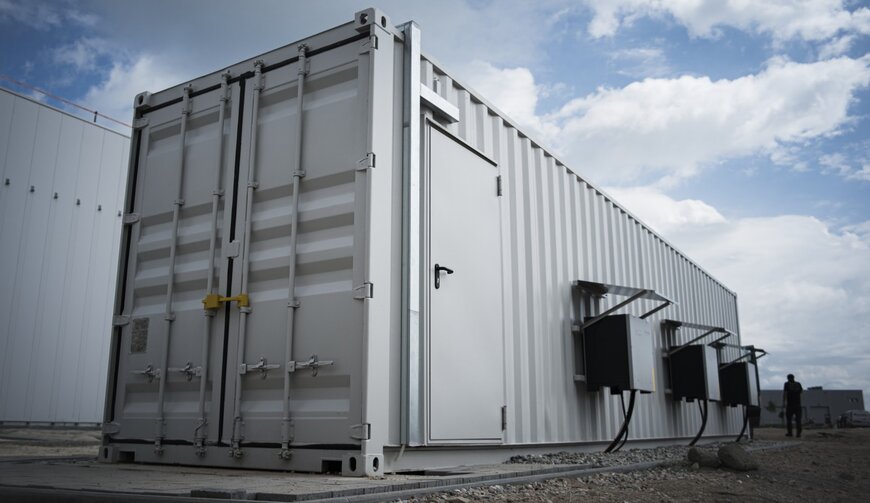
Energy storage is increasingly being integrated into building infrastructure to stabilize power consumption, reduce grid dependency, and optimize on-site energy use in sectors such as logistics, education, and commercial real estate. In this context, Goldbeck and Voltfang have entered a framework agreement to supply and integrate battery storage systems across multiple building types.
Standardized storage deployment across building types
The agreement covers the integration of battery storage systems into residential buildings, offices, schools, daycare centers, logistics facilities, and production halls. These systems are designed to operate in conjunction with photovoltaic installations, enabling buildings to store excess solar energy and use it during peak demand periods.
The partnership builds on initial deployments that began in early 2024, including a logistics center for Teveo in Ansbach, a secondary school in Hanover, and an IT company facility. These projects established standardized implementation processes, which reduce planning complexity and enable faster system rollout across similar building types.
By formalizing these processes into a framework agreement, both companies aim to scale deployment while maintaining consistent system design and integration practices.
Integration into energy management systems
Voltfang is responsible for system dimensioning, planning, and operational optimization. The battery systems are integrated with Venma, Voltfang’s energy management platform, which coordinates storage operation based on building demand, generation profiles, and grid conditions.
This setup supports decentralized energy use, allowing buildings to increase self-consumption of locally generated electricity while reducing peak loads on external grid infrastructure. In practice, this can lower electricity procurement costs and improve supply stability, particularly in facilities with variable or high energy demand such as logistics hubs and production sites.
The integration of battery storage into building energy systems aligns with broader trends in the digital supply chain, where energy availability and cost efficiency are becoming operational variables in industrial and logistics planning.
Role in energy resilience and infrastructure load balancing
Battery storage systems deployed at the building level contribute to local energy resilience by enabling partial independence from the grid. This is particularly relevant in regions facing grid congestion or fluctuating renewable energy supply.
In addition to buffering intermittent photovoltaic generation, these systems can support grid load balancing by shifting consumption away from peak periods. This reduces strain on distribution networks and supports more stable operation of energy infrastructure.
For construction and building services providers such as Goldbeck, integrating storage systems into standard building concepts extends lifecycle services beyond construction into operational energy optimization.
From pilot projects to scalable rollout
The transition from individual pilot projects to a framework-based deployment model reflects a shift toward industrialized implementation of energy storage in the built environment. Standardization reduces engineering overhead and enables replication across projects with similar load profiles and architectural configurations.
The agreement positions battery storage as a core component of building energy systems, particularly in applications where on-site generation, variable demand, and energy cost optimization intersect.
Edited by Aishwarya Mambet, Induportals Editor, with AI assistance.
www.voltfang.com
