
smartbuildingmag.com
16
'26
Written on Modified on
Automated Vehicle Identification and Authentication in Private Charging Networks
Valeo and ZEborne integrate automated authentication protocols to streamline energy management for private vehicle fleets and residential infrastructure.
www.valeo.com
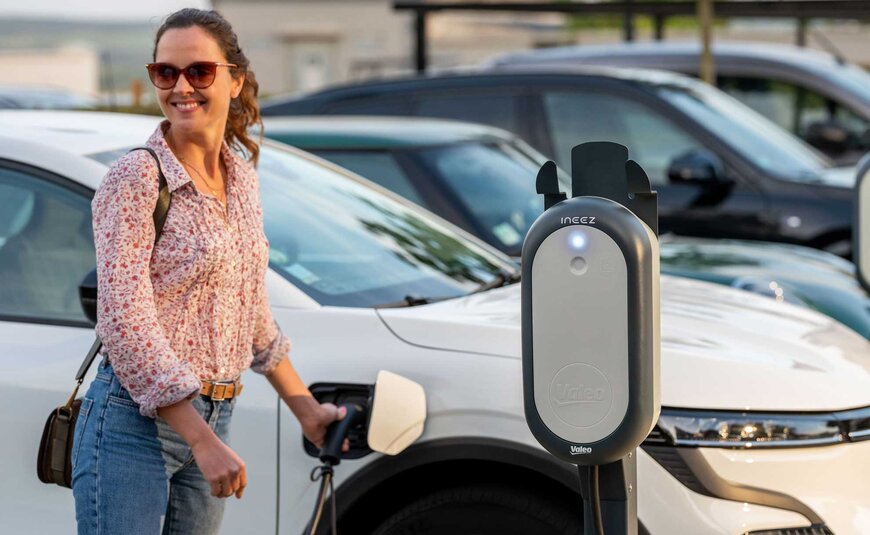
The integration of Autocharge functionality into smart charging hardware establishes a transparent identification layer between electric vehicles and charging points, primarily targeting the technical requirements of fleet managers and multi-family residential operators. By automating the handshake between the vehicle and the power source, this technology eliminates the need for physical RFID badges or manual mobile application triggers in the automotive data ecosystem.
Technical Mechanisms of Automated Authentication
The implementation of Autocharge on Ineez Pro Smart stations relies on unique vehicle identifiers to initiate charging sessions. Unlike traditional systems that require external authentication tokens, this function utilizes a secure digital communication protocol to recognize the vehicle upon connection. This automation addresses specific operational bottlenecks in the digital supply chain of energy, such as the administrative overhead of managing lost physical credentials and the mitigation of unauthorized energy siphoning.
For fleet managers, the system provides a distinct advantage in managing complex usage contracts. The hardware can differentiate between professional and personal mileage based on the vehicle’s identity, allowing for automated billing and data logging without driver intervention. This shift to a "plug-and-play" architecture reduces the risk of fraud and simplifies the data flow into supervision software.
Regulatory Alignment and Implementation
While the European Alternative Fuels Infrastructure Regulation (AFIR) mandates the ISO 15118-2 standard for Plug & Charge on public networks starting in January 2026, current private market solutions are moving toward similar automated architectures to ensure service continuity. The deployment by ZEborne includes the integration of these identification features into their Charging Station Management System (ZMS), which oversees the monitoring and maintenance of the hardware.
The technology was formally presented at the Flotauto trade show on March 12, 2026, at the Paris-Le Bourget Exhibition Centre. This demonstration highlighted the interoperability between Valeo hardware and ZEborne supervision software, confirming the technical feasibility of cross-platform automated charging in the French and Benelux markets.
Operational Benefits for Infrastructure Managers
The transition from manual to automated identification provides measurable improvements in infrastructure utilization:
- Security: Cryptographic identification of the vehicle's Media Access Control (MAC) address or unique ID minimizes unauthorized access compared to clonable RFID cards.
- Maintenance: Reduction in mechanical wear and tear on interface components and a decrease in help-desk tickets related to authentication failures.
- Scalability: Streamlined onboarding of new vehicles into a fleet, as the system recognizes the hardware rather than requiring the issuance of new physical badges.
According to Vartang Beguiachvili, Managing Director of ZEborne France and Benelux, the combination of smart charging equipment and specialized expertise provides a high level of quality from installation to intelligent energy management. Isabelle D’Ambrosio Pierre, Vice President of Smart Mobility at Valeo, noted that making identification transparent offers a solution that balances user convenience with optimal security requirements for private fleets.
Edited by an industrial journalist, Evgeny Churilov.
www.valeo.com
Edited by an industrial journalist, Evgeny Churilov.
www.valeo.com
