Engineers can add Bluetooth Low Energy technology to more products than ever before with TI's new CC2340 wireless MCUs. Texas Instruments today expanded its connectivity portfolio with a new family of wireless microcontrollers (MCU) that enable high-quality Bluetooth® Low Energy (LE) at half the price of competing devices.
As global adoption of Edge AI continues to rise through smart transitions, ASRock Industrial is excited to release the new iEPF-9010S/iEP-9010E Series Robust Edge AIoT Platform, enabled by 12th Gen Intel® Core Processors (Alder Lake S) with R680E/H610 chipsets to bring breakthrough performance at the Edge.
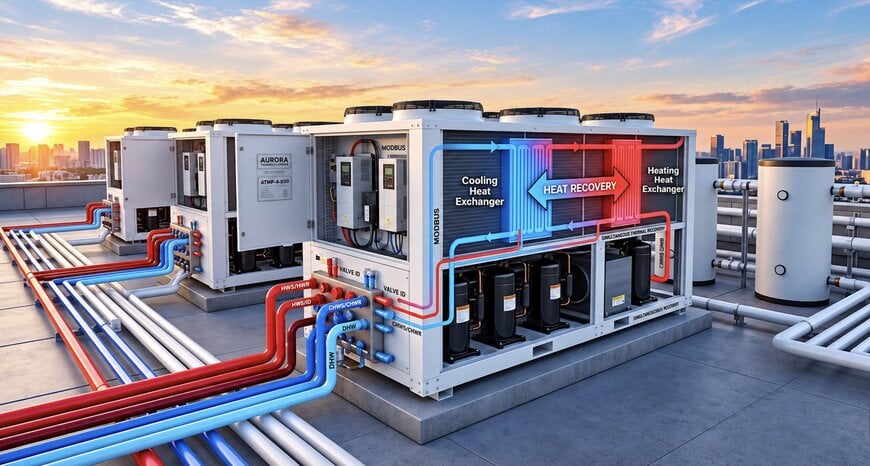
At Mostra Convegno Expocomfort (MCE) trade show, Siemens Smart Infrastructure will present a completely renewed portfolio designed to accelerate the decarbonization of commercial, industrial, and residential buildings.
Invited paper reports 3-step characterization chain and resulting methodologies and metrics that accelerate learning, provide data on device performance expectations at cryogenic temperatures.
You often see public charging stations in the German-speaking world reading the letters ME. They stand for "Mess- und Eichrecht" (measurement and calibration act). But what does that mean? What other calibration standards are out there? And why do I need a calibrated wallbox for my personal use? Here are the answers.
Infineon Technologies AG (FSE: IFX / OTCQX: IFNNY) today announced it plans to showcase smart sensing applications that make life easier, safer and greener at Sensors Converge 2022.