
smartbuildingmag.com
02
'26
Written on Modified on
Wireless Structural Inclinometers Ensure Construction Safety
Takenaka Corporation deployed TDK wireless inclinometer systems to evaluate real-time tilt monitoring across complex civil engineering environments.
www.tdk.com
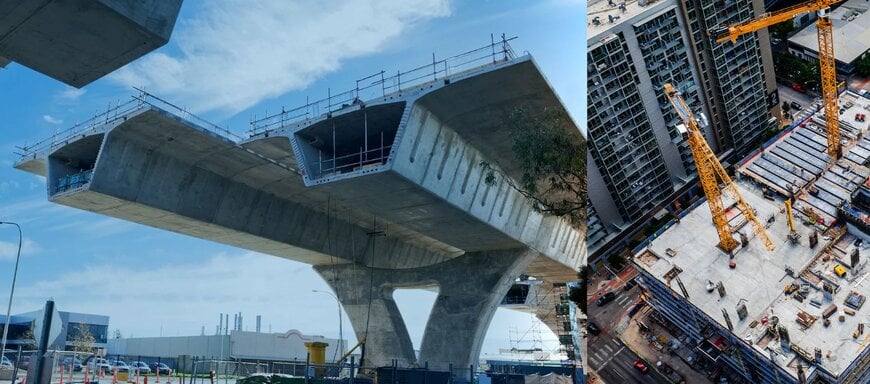
Civil engineering projects and public infrastructure assets such as tunnels, bridges, and retaining walls experience continuous micro-shifts caused by soil settlement, ground movement, or material degradation. Detecting minute structural deviations is essential to prevent catastrophic failures and ensure long-term stability. Conventional health monitoring often relies on manual site inspections or hardwired sensor networks, both of which introduce significant labor demands, operational disruption, and elevated cabling costs in challenging construction environments.
Technical Evaluation at Nagoya Site
To mitigate structural risks and address widespread skilled labor constraints, general contractor Takenaka Corporation conducted a comprehensive field evaluation of wireless inclination instrumentation. The company integrated TDK Corporation wireless high-precision inclinometer units at a project site in Nagoya, Japan. The objective was to confirm whether compact, battery-powered wireless monitoring systems could match the measurement stability of traditional hardwired instrumentation during extended operational cycles.
Operating Principles and Measurement Architecture
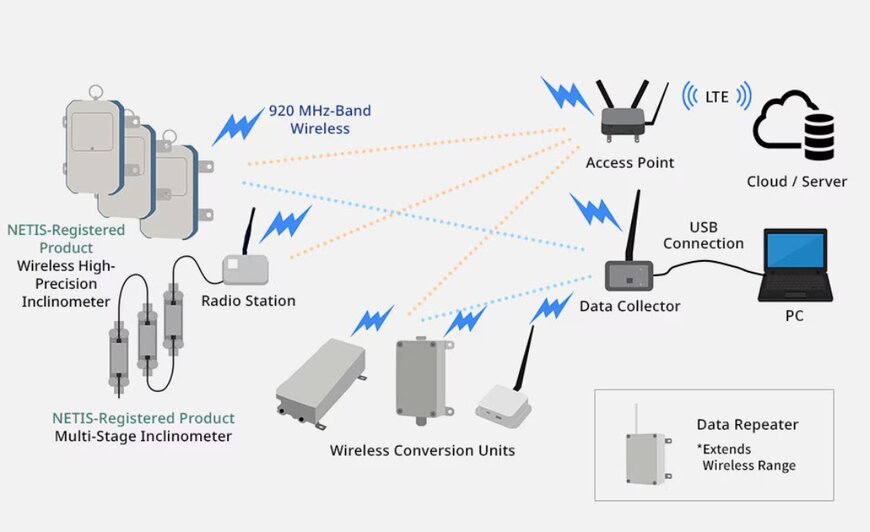
The evaluated technical solution integrates three-axis MEMS accelerometers with proprietary tilt-analysis algorithms and low-power control firmware. Operating through high-precision sensing mechanisms, the system detects micro-inclination variations with an accuracy of one-thousandth of a degree. Sensor units collect structural movement data automatically and transmit readings through integrated wireless protocols, providing remote real-time visibility without dedicated data cables or local power drops.
Operational Performance and Deployment Results
During an evaluation period spanning eighteen months, Takenaka Corporation confirmed that the wireless measurement architecture maintained data precision and operational stability equivalent to conventional hardwired monitoring equipment. Eliminating signal wiring halved total installation and dismantling times at the site, substantially cutting installation expenditures and reducing overall maintenance workloads.
Takao Kono of Takenaka Corporation indicated that expanding structural health monitoring remains critical for extending the service life of structures and mitigating disaster impact. The verification at Nagoya proved that compact, lightweight wireless units resolve critical installation barriers at sites facing labor shortages or routing restrictions.
Data-Driven Preventive Maintenance
Beyond baseline safety oversight, continuous structural monitoring facilitates predictive maintenance strategies. Long-term accumulation of remote inclination metrics enables automated anomaly recognition, trend analysis, and early intervention before structural deformation causes downtime.
Makoto Sekijima of TDK stated that the company focuses on advancing anomaly detection and trend analytics within the sensor architecture to transition raw measurement data into automated preventive maintenance services. Deployment remains active across civil engineering works in Japan, with parallel technical validation programs expanding to infrastructure sites in Singapore.
Edited by Evgeny Churilov, Induportals Media - Adapted by AI.
www.tdk.com
