
smartbuildingmag.com
03
'26
Written on Modified on
Smart parking system improves urban mobility
Municipality of Catania and Hanwha Vision deploy AI-based parking and monitoring solution to enhance traffic flow, safety and data-driven urban management.
hanwhavision.eu
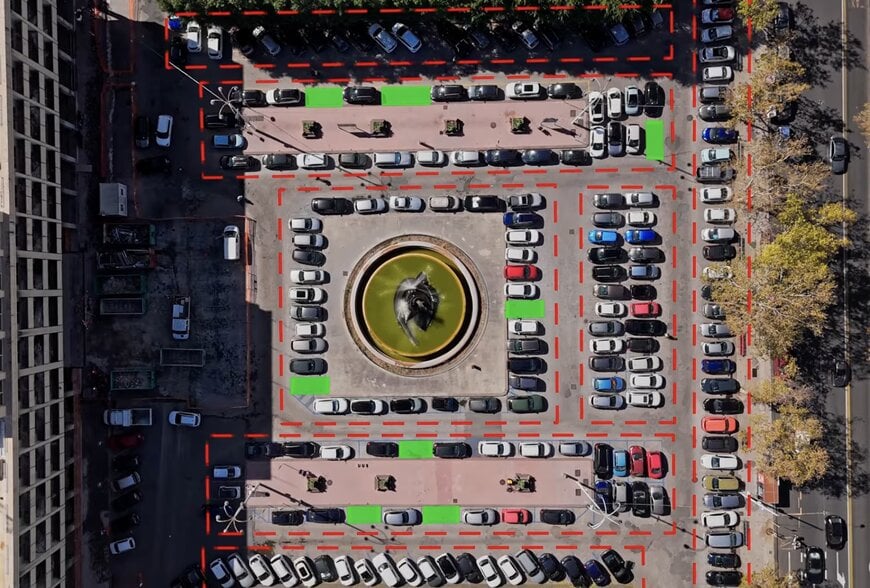
Catania has implemented an intelligent parking and urban monitoring system based on technology from Hanwha Vision to address congestion, improve mobility and support data-driven city management. The solution combines AI-enabled video analytics with smart parking software to deliver real-time insights for both citizens and local authorities.
Context: urban complexity and mobility challenges
The Municipality of Catania manages a large metropolitan area with more than one million residents across the city and surrounding sites. As one of Italy’s most populated urban regions, it faces increasing pressure to modernise infrastructure while preserving its historic Baroque architecture.
Traffic congestion, inefficient parking management and limited real-time visibility of urban conditions were key operational challenges. The administration aimed to improve mobility, enhance safety and introduce digital services while maintaining compatibility with heritage constraints.
At the same time, the city sought to establish a scalable foundation for broader smart city initiatives, including urban monitoring and predictive planning.
Technical solution and deployment
To meet these objectives, the municipality deployed a system combining Hanwha Vision A-Series cameras with Park Smart software. The solution integrates AI-based video analytics with real-time data transmission.
Approximately 100 cameras were installed at high-demand parking locations in the historic city centre. The devices were selected for their discreet design, enabling installation on existing infrastructure without compromising the city’s architectural heritage.
The system uses edge AI processing, allowing analytics to be performed directly within the cameras. This eliminates the need for centralised servers and reduces latency, enabling faster detection and response.
The cameras monitor on-street parking spaces, including time-based and paid zones, detecting availability and transmitting data to a central management platform.
Real-time parking and traffic management
The system provides real-time visibility of available parking spaces through mobile applications and in-vehicle interfaces. This enables drivers to locate nearby parking more efficiently, reducing search time and associated congestion.
From an operational perspective, the municipality gains access to:
Context: urban complexity and mobility challenges
The Municipality of Catania manages a large metropolitan area with more than one million residents across the city and surrounding sites. As one of Italy’s most populated urban regions, it faces increasing pressure to modernise infrastructure while preserving its historic Baroque architecture.
Traffic congestion, inefficient parking management and limited real-time visibility of urban conditions were key operational challenges. The administration aimed to improve mobility, enhance safety and introduce digital services while maintaining compatibility with heritage constraints.
At the same time, the city sought to establish a scalable foundation for broader smart city initiatives, including urban monitoring and predictive planning.
Technical solution and deployment
To meet these objectives, the municipality deployed a system combining Hanwha Vision A-Series cameras with Park Smart software. The solution integrates AI-based video analytics with real-time data transmission.
Approximately 100 cameras were installed at high-demand parking locations in the historic city centre. The devices were selected for their discreet design, enabling installation on existing infrastructure without compromising the city’s architectural heritage.
The system uses edge AI processing, allowing analytics to be performed directly within the cameras. This eliminates the need for centralised servers and reduces latency, enabling faster detection and response.
The cameras monitor on-street parking spaces, including time-based and paid zones, detecting availability and transmitting data to a central management platform.
Real-time parking and traffic management
The system provides real-time visibility of available parking spaces through mobile applications and in-vehicle interfaces. This enables drivers to locate nearby parking more efficiently, reducing search time and associated congestion.
From an operational perspective, the municipality gains access to:
- Parking occupancy rates
- Turnover patterns
- Demand distribution across locations
These insights support traffic management strategies and enable adjustments to parking policies based on actual usage data.
The combination of reduced vehicle circulation and improved parking allocation contributes to enhanced road safety and lower congestion levels.
Operational impact and benefits
The deployment has resulted in measurable improvements in urban mobility and service delivery. By reducing the time spent searching for parking, the system decreases traffic density in high-demand areas.
Edge-based analytics also improve system efficiency by:
The combination of reduced vehicle circulation and improved parking allocation contributes to enhanced road safety and lower congestion levels.
Operational impact and benefits
The deployment has resulted in measurable improvements in urban mobility and service delivery. By reducing the time spent searching for parking, the system decreases traffic density in high-demand areas.
Edge-based analytics also improve system efficiency by:
- Minimising infrastructure costs
- Reducing data transmission requirements
- Enabling near real-time decision-making
The integration of parking management with urban monitoring creates a unified platform that supports both mobility and regulatory functions.
Future scalability and applications
The municipality plans to expand the system beyond parking management. Future applications include detection of unsafe driving behaviours, monitoring of restricted vehicles and broader public safety enforcement.
Additional use cases under consideration include:
Future scalability and applications
The municipality plans to expand the system beyond parking management. Future applications include detection of unsafe driving behaviours, monitoring of restricted vehicles and broader public safety enforcement.
Additional use cases under consideration include:
- Traffic flow analysis
- Extreme weather monitoring
- Roadside waste detection
- Expanded urban surveillance
The use of an open platform architecture enables the integration of additional sensors and analytical functions without major infrastructure changes.
Results and strategic significance
The project demonstrates how intelligent parking systems can serve as an entry point for wider smart city development. By combining real-time data collection with AI-based analytics, the municipality has established a scalable infrastructure for urban management.
The solution supports improved quality of life for residents while providing authorities with actionable insights for long-term planning and operational efficiency.
Edited by an industrial journalist, Lekshman Ramdas, with AI assistance.
www.hanwhavision.com
Results and strategic significance
The project demonstrates how intelligent parking systems can serve as an entry point for wider smart city development. By combining real-time data collection with AI-based analytics, the municipality has established a scalable infrastructure for urban management.
The solution supports improved quality of life for residents while providing authorities with actionable insights for long-term planning and operational efficiency.
Edited by an industrial journalist, Lekshman Ramdas, with AI assistance.
www.hanwhavision.com
